Uganda Reaffirms Commitment to Global Disability Summit Pledges: LNOB 4 Strengthens Inclusive Participation
Category
GDS 2025 General Uganda
© Paola Hernendez/ HI
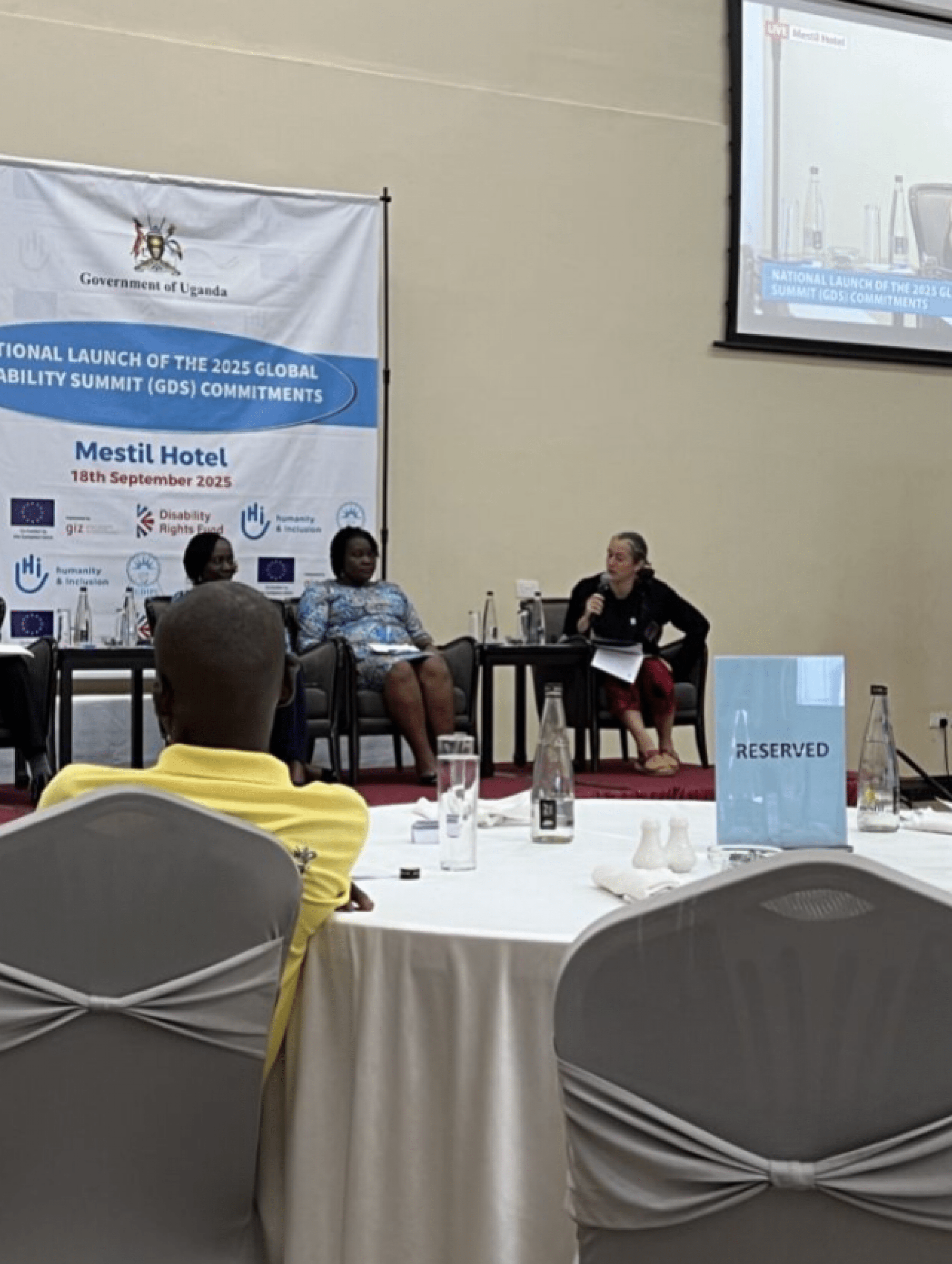
Uganda – Uganda has renewed its commitment to fully implement the pledges made at the 2025 Global Disability Summit (GDS) in Berlin. The national launch event took place at Mestil Hotel in Kampala and was organized by the Ministry of Gender, Labour and Social Development (MGLSD), in close coordination with the National Union of Disabled Persons of Uganda (NUDIPU), GIZ and Humanity & Inclusion (HI). The event brought together key government officials, development partners, and Organizations of Persons with Disabilities (OPDs) to advance inclusive humanitarian and development action in the country. This launch highlighted the importance of continuing progress under Phase 4 – Leave no one behind!, a project implemented by HI with support from the German Federal Foreign Office (GFFO).
A major focus of the event was the active participation of OPDs, including refugee-led groups. Through LNOB 4, HI worked closely with partners to ensure that persons with disabilities were meaningfully represented throughout the event. This reflects Uganda’s commitment that persons with disabilities must be directly involved in decisions that affect their lives, ensuring inclusion across both national and humanitarian systems.
The Minister of State for Disability Affairs, Hon. Hellen Asamo, reaffirmed that disability inclusion is central to Uganda’s development. She highlighted national reforms including the strengthened Persons with Disabilities Act, integration of disability inclusion in the National Development Plan IV (NDP IV), and new requirements for elevators in multi-storey public buildings. She also shared progress within the Parish Development Model (PDM), noting that funding to support participation of persons with disabilities has increased, but uptake of the reserved 10% still needs improvement.
Hon. Hellen Asamo emphasized:
“Disability inclusion is not charity, it is a development imperative.”
During a panel discussion, HI’s Regional Programme Director, Ms. Nadim Pauline, highlighted the role of international organizations in supporting Uganda to deliver on its GDS commitments. She noted that refugees with disabilities are clearly included in Uganda’s pledges, which aligns with HI’s commitments under LNOB 4 in Nakivale and Kyaka II refugee settlements.
Ms. Nadim Pauline noted:
“HI’s work with refugees, OPDs, and service providers in settlements demonstrates our commitment to ensuring that persons with disabilities—whether Ugandan or refugee—benefit equally from national and humanitarian policies.”
She also underscored the importance of working closely with OPDs as leaders in humanitarian and development processes. She explained that refugee-led OPDs are already informing decision-making through settlement coordination structures and accessibility audits.
Ms. Nadim Pauline said:
“Under LNOB 4, refugee OPDs already co-lead accessibility audits, advocate within settlement coordination systems, and shape inclusive service delivery.”
She further shared examples of improved coordination driven by LNOB 4, including the revival of the Protection and Assistance to Persons with Specific Needs (PSN) Working Group with UNHCR and support to UNDP to mainstream disability inclusion. She called on actors to strengthen collaboration and ensure accountability in line with the Convention on the Rights of Persons with Disabilities (CRPD).
Stakeholders also called for action closer to communities. NUDIPU’s Chief Executive Officer, Ms. Esther Kyozira, urged Ministries, Departments and Agencies (MDAs) to ensure that GDS commitments translate into access to services and opportunities at local level, where persons with disabilities continue to face challenges.
Ms. Esther Kyozira stressed:
“These global commitments were not made for show. We want to see change where people live.”
Germany’s Ambassador to Uganda, H.E. Matthias Schauer, reaffirmed Germany’s long-term partnership in advancing disability inclusion and highlighted that collective efforts are key to removing structural barriers.
The launch demonstrated strong collaboration between government, OPDs, humanitarian actors, and international partners to ensure Uganda’s 2025 GDS pledges lead to real and sustainable change. As Uganda continues aligning national policies with global standards, Phase 4 – Leave no one behind! is showing how meaningful participation and inclusive partnerships can improve lives. With continued momentum and empowered OPDs, Uganda is moving toward a future where every person with a disability—refugee or national—can participate, contribute, and thrive.