
Amplifying Voices – Strengthening OPD through local Peer Exchange Workshop in South Sudan
Category
General South Sudan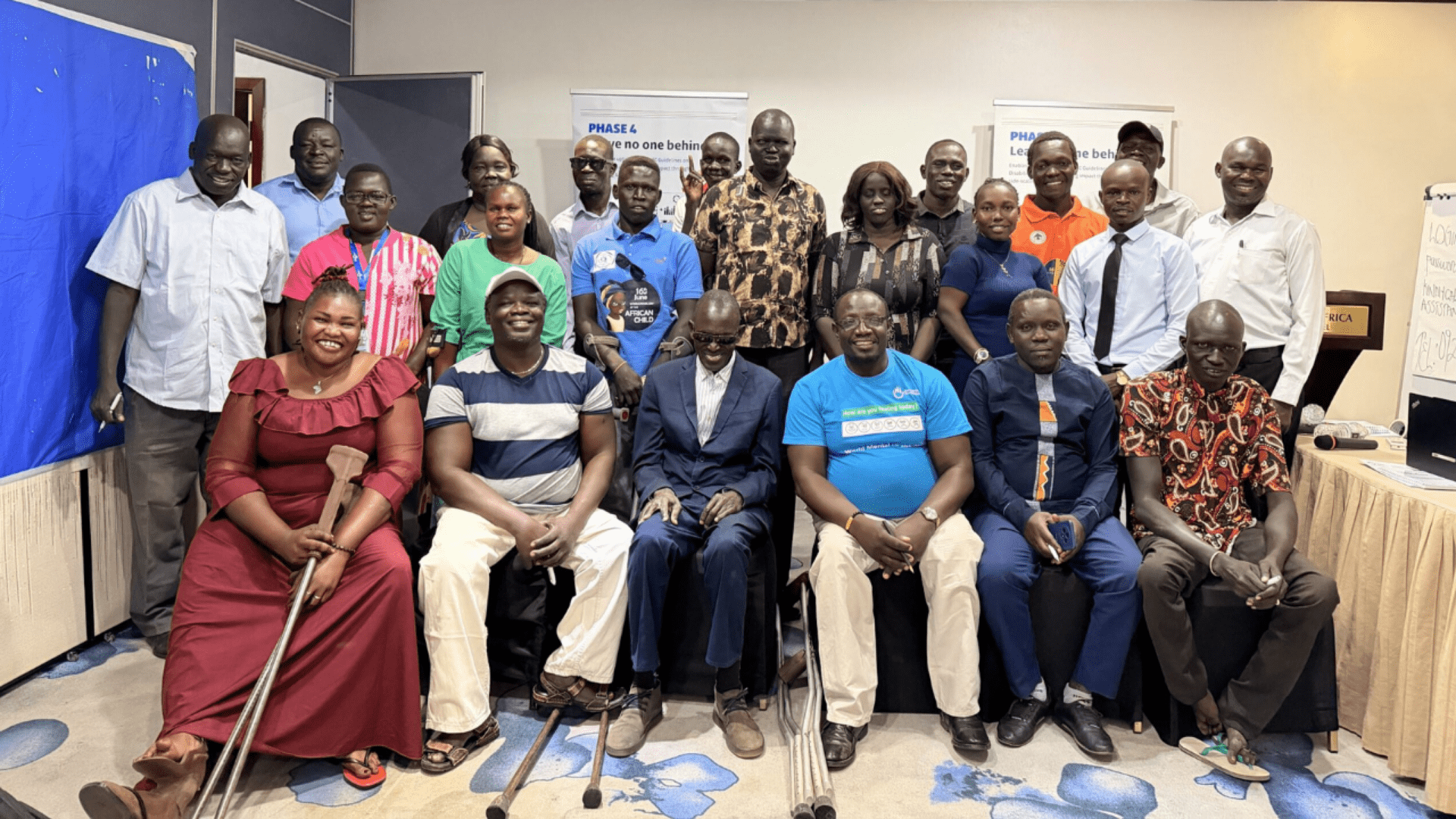
© Seppora/HI
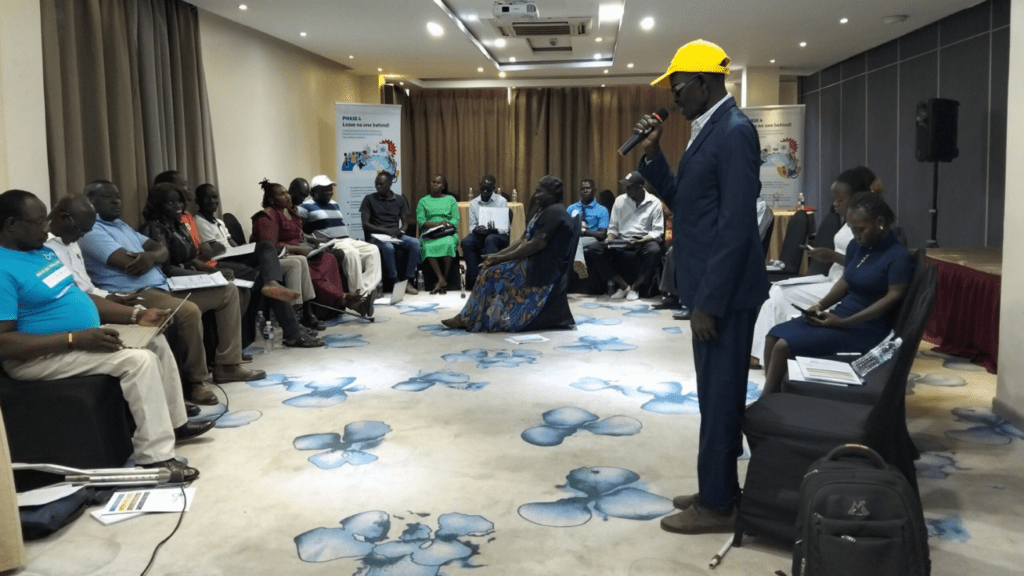
HI- South Sudan, held a two-day in-country Organization of Persons with Disabilities (OPD) peer-exchange workshop as part of Phase 4 – Leave no one behind! Project (LNOB 4) from 4th – 5th March 2026, marking an important milestone in advancing disability-inclusive humanitarian action.
The workshop was organized in collaboration with Africa Disability Forum and brought together twenty-five leaders from eleven OPDs in Juba and other states. Participants gathered to learn, share their experiences, enhance networking and collaboration to amplify their voices for disability-inclusive humanitarian action.
Building on Regional Successes
The workshop was a replica of the recently concluded East Africa Regional OPD peer-exchange held in Kampala-Uganda, with OPDs from South Sudan, Somalia/Somaliland and Uganda, aiming at promoting cross-border learnings among the sub-granted OPDs under Phase 4-LNOB. Representatives from South Sudan included the South Sudan Association of the Physically Impaired (SSAPI) and People with Disability Society (PWDS).
SSAPI and PWDS, which had limited recognition before collaborating with LNOB, have since expanded their influence at the national and regional level. The OPDs showcase their contributions in influencing decision making in humanitarian cluster coordination mechanism to priorities disability inclusion and disaggregate data by age gender and disability.
Sharing Knowledge and Strengthening Unity
The in-country peer exchange provided an opportunity for SSAPI and PWDS to share the key takeaways from the regional peer exchange with other South Sudanese OPDs to learn and adapt the key recommendations as well as reflect on the importance of collaboration and unified voices in advocating for the rights of persons with disabilities.
Key Recommendations for Progress
The key takeaway and recommendations from the in-country peer exchanges were:
- Evidence-based advocacy is the gateway for OPDs to influence decision making at higher coordination levels like inter-cluster coordination group.
- Networking and strong collaboration among the OPDs at all levels is paramount to amplify and influence decision making in humanitarian coordination mechanisms.
- Recognizing local OPDs as equal implementing partners through direct funding to promote long term sustainability and localization.
- Continuous organization of peer exchanges by the OPDs at payam/counties, state, national and regional level to ensure continuous collaboration and learning.
A Historic Step Forward
During the closing remark, the Director of Disability from the Ministry of Gender, Child and Social Welfare declared:
“Today, history has been made in South Sudan, because this is the first ever in-country OPD peer-exchange to be conducted where OPDs are brought together to learn and share their experiences in order to have unified voices to advance disability inclusion. I would like to appreciate Humanity & Inclusion for initiating this workshop and German Federal Foreign Office for the financial support. I, therefore, urge the OPDs to replicate this kind of peer exchange as well as asking the partners to support such initiates.”
A Model for the Future
The success of both the in-country and regional OPD peer exchange highlights the significance of enhancing the technical capacity of OPDs through peer-to-peer learning, networking and collaboration to strengthen disability-inclusive coordination and meaningful participation of persons with disabilities in coordination structures as a mean to advance localization.
Text by: Obale Musa William, Project Manager, South Sudan