
Advancing Inclusive WASH: Training Workshops for Partners and OPDs in South Sudan
Category
Capacity Strengthening South Sudan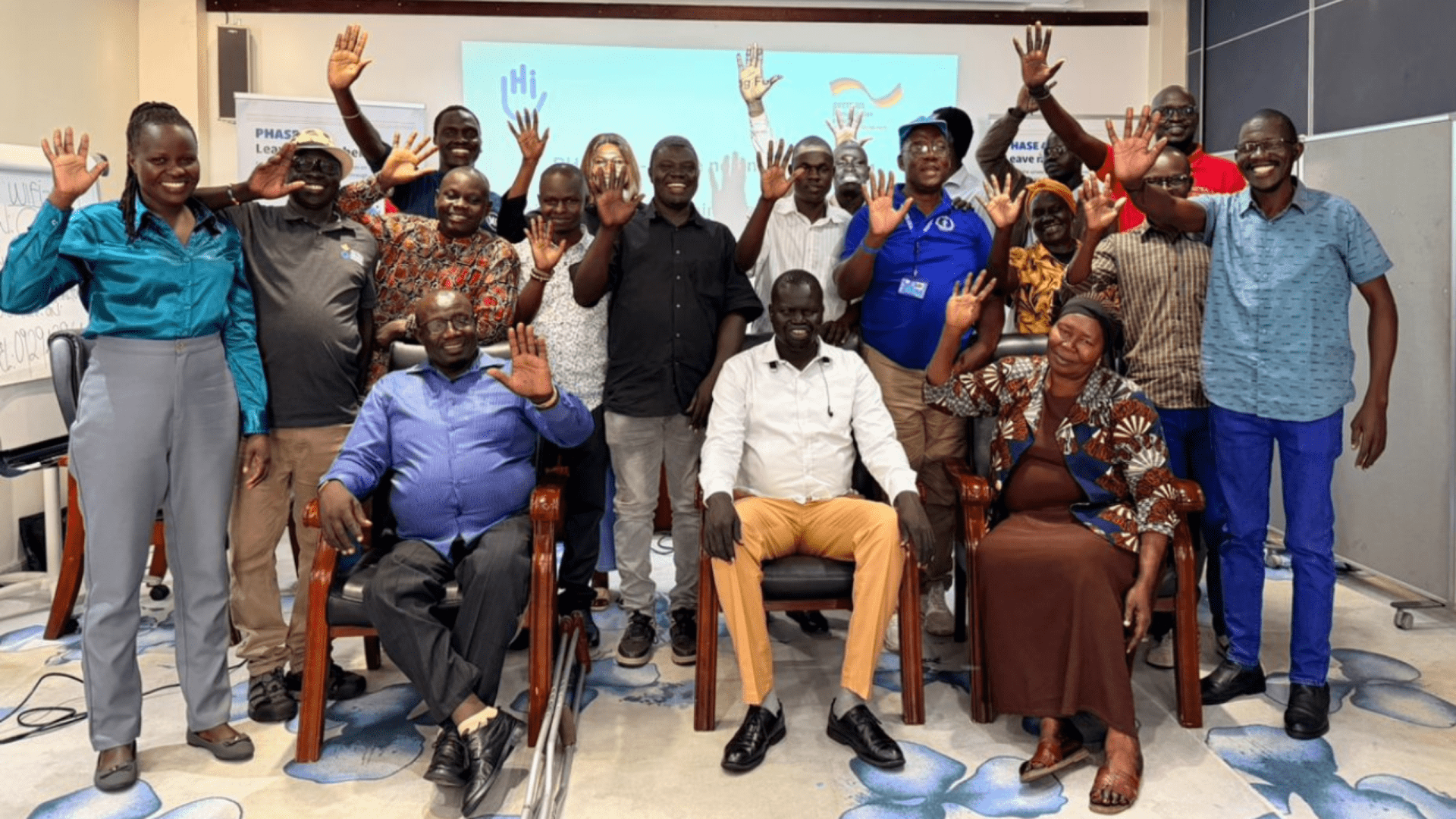
© Seppora / HI South Sudan
In April 2026, the “Leave no one behind!” project conducted two workshops in South Sudan to strengthen the capacity of WASH partners and Organizations of Persons with Disabilities (OPDs) in disability-inclusive Water, Sanitation, and Hygiene (WASH) interventions.
Review Adapts and Action Learning Laboratory (RAAL-lab) in Juba
From 31st March to 2nd April 2026, a three-day RAAL-lab workshop was held in Juba. The training brought together representatives from national and international NGOs, UN agencies, government institutions, and OPDs. The objective was to enhance the participants knowledge and practical skills to design, implement, and monitor disability-inclusive WASH interventions, based on the WASH training package developed by LNOB
The workshop adopted a participatory approach, combining presentations, group discussions, video clips, and practical exercises, including demonstrations on menstrual health and hygiene. Participants reviewed their current programming, identified gaps, and developed action plans to integrate inclusive practices into their interventions.
A representative from the Ministry of Gender, Child, and Social Welfare highlighted the importance of such trainings:
“This workshop is of great significance as it contributes to Sustainable Development Goals 6 by ensuring no one is left behind when it comes to clean water and sanitation. This training will equip you with knowledge and tools to ensure WASH services meet the needs of every community member.”
Capacity Strengthening Workshop in Wau
From 13th to 17th April 2026, a five-day capacity-strengthening workshop was conducted in Wau for OPD representatives and government officials from the Relief and Rehabilitation Commission (RRC) and the State Ministry of Gender, Child, and Social Welfare. The training focused on the disability-inclusive WASH toolsets and inclusive coordination, emphasizing the importance of meaningful participation of OPDs in humanitarian coordination.
Participants engaged in interactive discussions, group work, and experience-sharing sessions, reflecting on the challenges faced by persons with disabilities in accessing WASH services. The workshop highlighted the critical role of OPDs in advocacy, coordination, collaboration, and monitoring to ensure that WASH interventions are inclusive and responsive to diverse needs.
By the end of the training, participants expressed confidence in using the training package by educating other partners and developed action points to increase the uptake of the inclusive WASH practices within their communities, and to advocate for the meaningful inclusion of persons with disabilities in decision-making processes.
Outcomes and Commitments
Both workshops resulted in strengthened commitments among participants to mainstream disability-inclusion in WASH programs. WASH partners emphasized the need for continuous collaboration with OPDs, resource allocation for accessibility, and improved coordination mechanisms.
A representative from the RRC noted, “We thank HI for prioritizing persons with disabilities by strengthening their capacity to advocate for their rights to ensure access to humanitarian services. This is part of inclusive localization.”
Workshops like this mark important steps toward building a more inclusive WASH sector in South Sudan by ensuring that the needs and rights of persons with disabilities are systematically addressed in humanitarian response efforts.

Text by: Obale Musa William, Project Manager, South Sudan