
LNOB’s OPD Partner JONAPWD Hosts Workshops on Leadership, Funding, and Safeguarding for OPDs in Nigeria
Category
Capacity Strengthening IASC-Guidelines Nigeria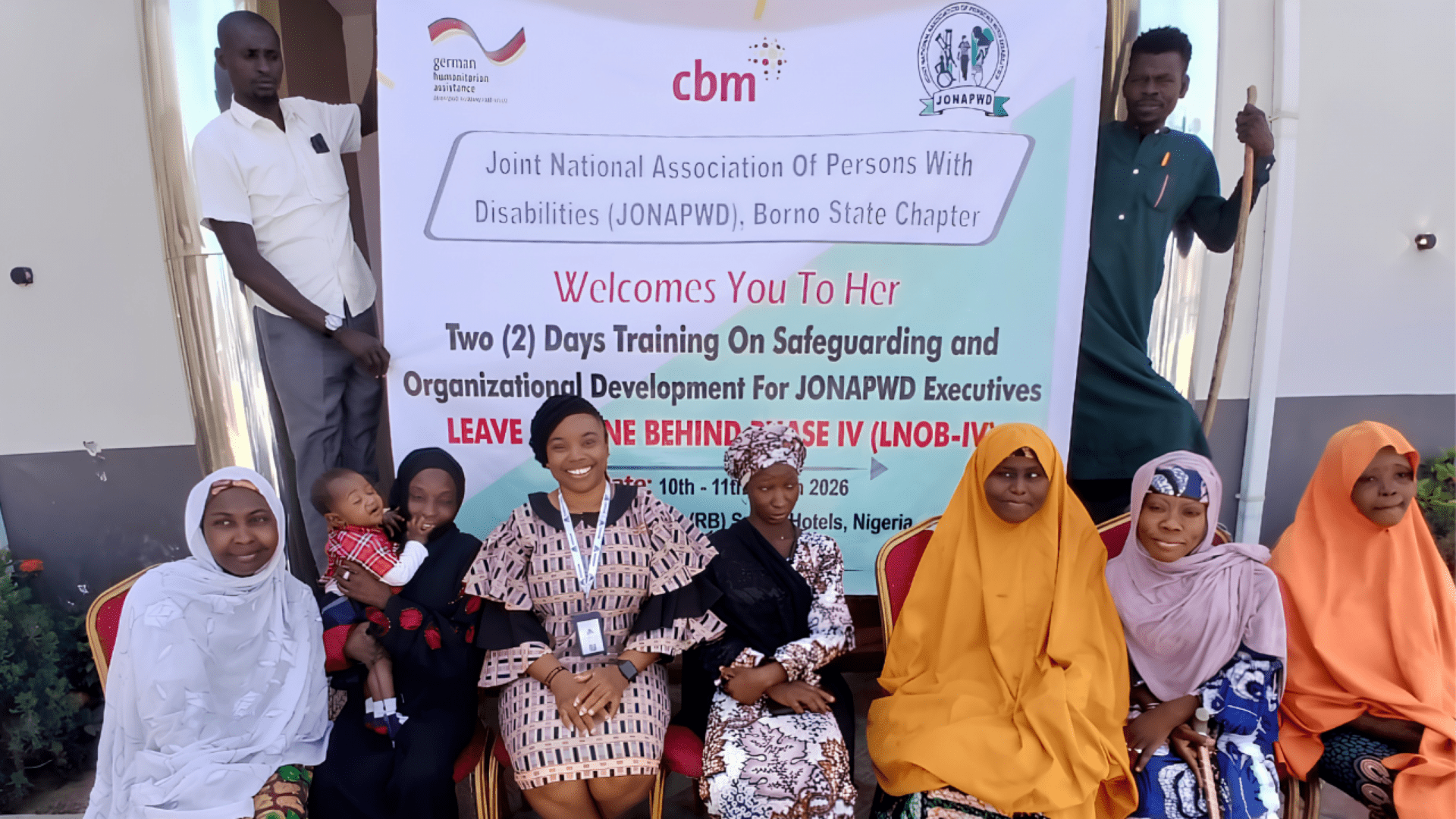
© JONAPWD
From governance and leadership to safeguarding and proposal writing, the Organization of Persons with Disabilities (OPD) JONAPWD is taking further steps to strengthen the capacity of OPDs in Nigeria. Through a series of targeted workshops, JONAPWD is equipping its OPD members with the skills, knowledge, and tools needed to further advocate for inclusion, accountability, and protection and influence the humanitarian system.
About JONAPWD
The Joint National Association of Persons with Disabilities (JONAPWD) is an umbrella organization for persons with disabilities, to promote their rights and development at local and international levels. Based in Nigeria, JONAPWD is composed of six different groups, representing different types of disabilities. JONAPWD is a partner of the Leave no one behind! (LNOB) project and works to ensure equal opportunities and independence, dignity and respect for all member of the disability community.
In an effort, to strengthen the capacity of its members JONAPWD have conducted several workshops in the past months.
Strengthening Governance and Leadership
In late 2025, JONAPWD’s Borno State Chapter hosted a two-day Governance and Leadership Training for OPDs. The training brought together JONAPWD executives and OPD leaders to deepen their understanding of governance systems, inclusive leadership, accountability, and conflict resolution within disability-inclusive organizations. The workshop adopted a participatory approach, combining presentations, discussions, and group exercises in English and Hausa. Participants openly discussed common challenges affecting OPDs, including weak decision-making structures, lack of transparency, leadership disputes, and limited inclusion of some disability clusters in decision-making processes.
Key sessions focused on governance principles, roles of governance bodies, and inclusive leadership. Participants developed practical strategies to strengthen governance in their organizations, including improving internal communication, promoting financial accountability, and establishing effective conflict resolution mechanisms. At the end of the training, action plans were developed to promote transparency and inclusive governance across OPDs in Borno State.
Building Skills in Proposal Writing and Grant Management
JONAPWD organized a two-day Introductory Training on Proposal Writing and Grant Management in early 2026 to strengthen the capacity of its members in proposal development, resource mobilization, and accountable grant management. The training targeted participants with limited or no prior experience and aimed to equip them with practical skills for accessing and managing funding opportunities effectively.
The program used a beginner-friendly approach, combining interactive presentations, guided writing exercises, and practical budgeting sessions. Participants practiced translating community challenges into structured project ideas with measurable objectives and activities. The second day focused on grant management, covering budgeting principles, financial accountability, and reporting requirements. Participants worked in groups to develop mini project proposals, which were presented for peer feedback.
The training achieved significant outcomes, including improved understanding of proposal writing concepts, increased ability to draft simple proposals, and enhanced knowledge of budgeting and financial accountability. Participants expressed increased confidence in pursuing funding opportunities and applying their new skills within their organizations.
Advancing Safeguarding and Protection
In March 2026, JONAPWD hosted a Safeguarding, Prevention of Sexual Exploitation and Abuse (PSEA), as well as Gender-Based Violence (GBV) Training in to strengthen the knowledge and institutional capacity of its members within disability-inclusive programming. The training was designed in recognition of the heightened risks of abuse, exploitation, neglect, and exclusion faced by persons with disabilities, particularly in humanitarian and community settings.
The training brought together participants from different disability clusters, ensuring discussions reflected their lived realities. The main objective was to equip participants with practical knowledge and tools to identify safeguarding risks, understand reporting systems, and promote safe and inclusive environments.
Participants discussed how stigma, discrimination, and inaccessible environments increase vulnerability to abuse and exploitation. They identified safeguarding risks within their communities and JONAPWD structures, stressing the need for stronger accountability systems and inclusive safeguarding mechanisms. At the conclusion of the training, participants developed practical action points and safeguarding commitments to strengthen systems within JONAPWD and their communities.
Success and Impact from the Workshops
The workshops organized by JONAPWD have been highly effective, demonstrating measurable improvements in participants’ knowledge, skills, and commitment to fostering inclusion and accountability. By addressing governance, funding access, and safeguarding, JONAPWD is not only strengthening the capacity of OPDs but also advancing the Leave no one behind! objectives. These efforts pave the way for more disability-inclusive humanitarian action in line with the IASC Guidelines on Inclusion.