Raising the Bar: Inclusion Feeds Everyone.
Category
Capacity Strengthening GDS 2025 General Pilot Countries South Sudan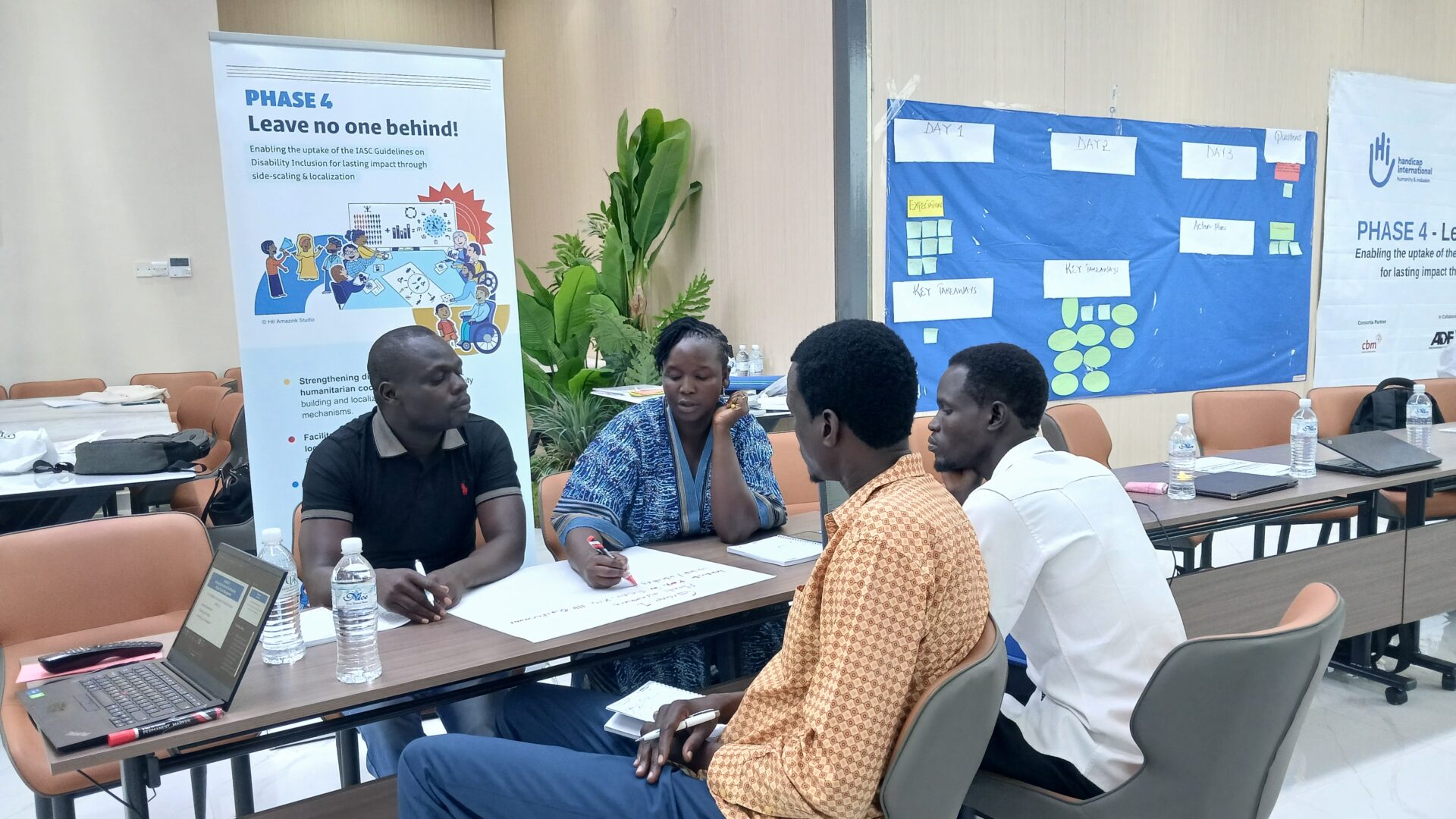
© Musa / HI South Sudan
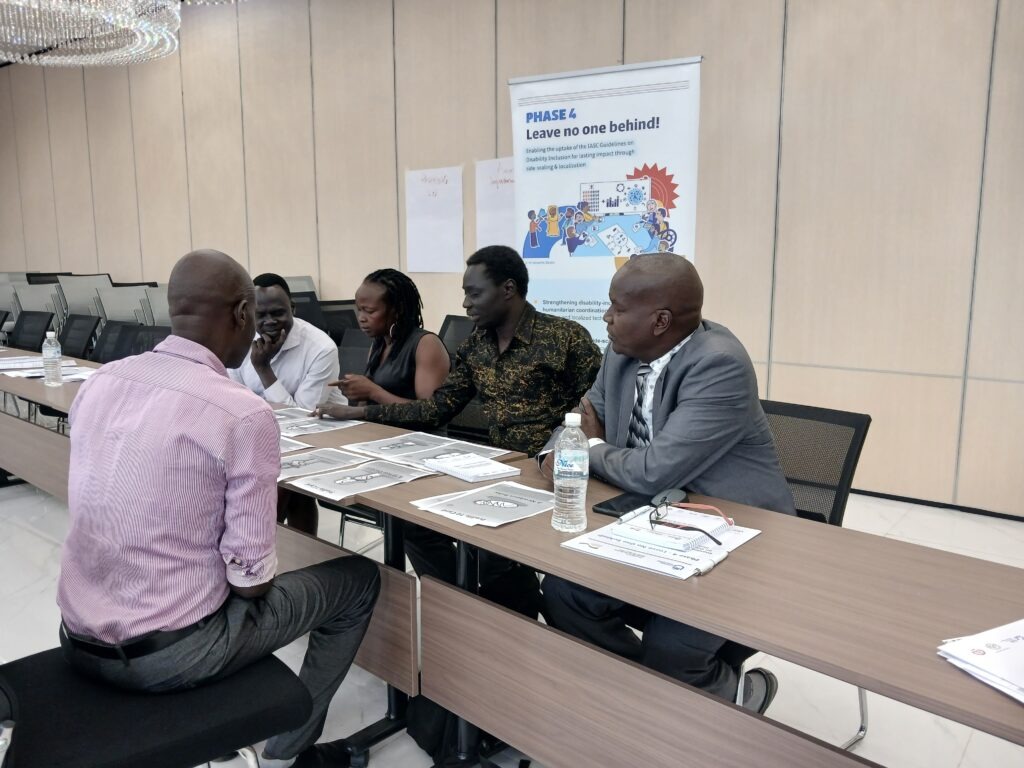
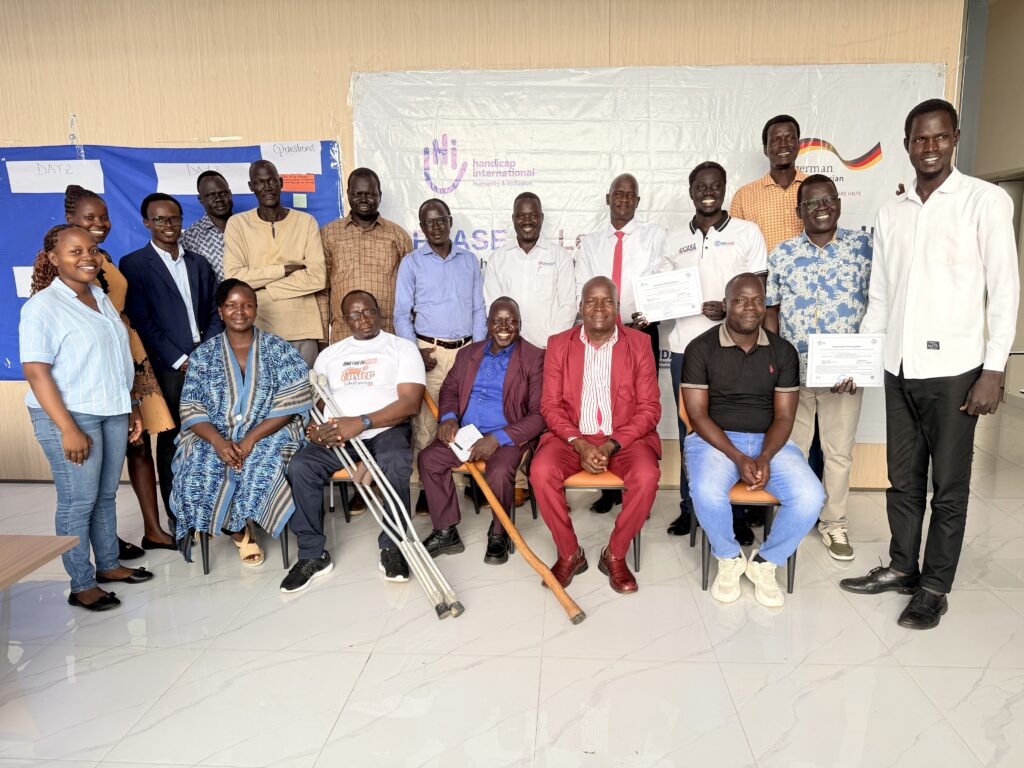
Humanity & Inclusion (HI) South Sudan, “Phase 4-Leave no one behind!” team, conducted a three-day inclusive Food Security workshop in Juba from 18–20 August 2026 and in Wau from 26-28 August 2026 respectively. In Juba, the workshop brought together 12 FSL partners from both International and National organizations to enhance their knowledge and practical skills in identifying and addressing barriers that persons with disabilities face when accessing food security assistance, nutrition and related humanitarian services.
The training comes at a critical time for South Sudan, where millions of people continue to face severe food insecurity amid conflict, displacement, climate-related shocks and funding constraints. Recent reports indicate that more than 7.8 million people are experiencing acute food insecurity in the country.
Through practical discussions, group exercises, video clips, case studies, and real live experience sharing from two persons with disabilities, participants explored how disability inclusion can be integrated throughout the programme cycle from needs assessment, planning and designed, implementation and monitoring and evaluation by applying the twin-track approach and four Must Do Actions; Meaningful participation, Removal of barriers, empowerment and capacity building and data disaggregation.
A key focus was on identifying and removing physical, communication, institutional and attitudinal barriers that can prevent persons with disabilities from accessing food assistance and nutrition services on an equal basis as well as considering disability-related extra cost in CVA intervention.
The workshop also equipped the participants with the skills and knowledge of how to review food security related assessment tools to become disability inclusive using the guidance tools for reviewing protection and Food security assessment tools to become more disability inclusive.
“Disability inclusion is not an additional activity; it is ensuring that existing food security programmes are designed and delivered in a way that enables everyone to participate and benefit,”
said Kepa, Program Manager, Mercy Corps.
By the end of the three days, participants had developed practical action points they intend to apply within their respective organizations and programmes to practically replicate what they learned from the training to improve the accessibility, participation and accountability of FSL interventions.
“I would like to thank HI and the donor for bringing us this important training. Practically we had no idea on disability-related extra cost in our CVA intervention, but today, I am excited to have learned this and will ensure this is integrated in our intervention,”
Tombe, FSL Coordinator, Community Needs Initiative.
The training represents another step towards ensuring that food security and nutrition assistance reaches everyone in South Sudan as a contribution to Sustainable Development Goal 2 (zero hunger).
Text by: Obale Musa William, Project Manager, South Sudan