
Building Together: Collaborations with OPDs Create Innovative Solutions for Disability-Inclusive WASH in South Sudan
Category
General IASC-Guidelines South Sudan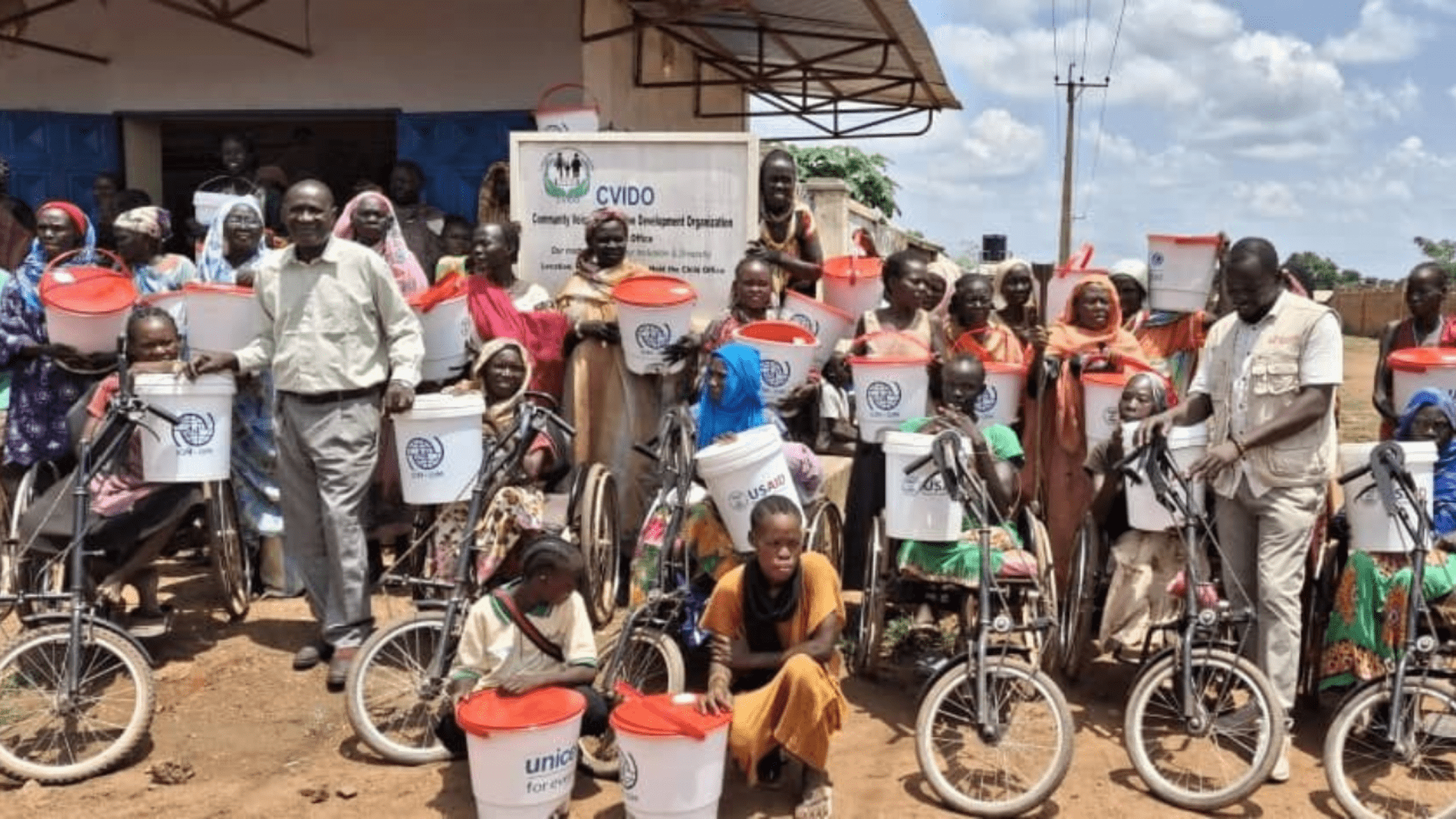
© HI
In Wau, South Sudan, organizations are collaborating to ensure that no one is left behind when it comes to accessing clean water, sanitation, and hygiene (WASH). Our Phase 4-LNOB-Project has enabled partnerships between Organizations of Persons with Disabilities (OPDs) and WASH actors, creating solutions that respond better to the needs of persons with disabilities.
Inclusive WASH: A Community Effort
As part of Phase 4 – Leave no one behind!, our South-Sudan team has organized trainings and Review, Adapt and Action Learning laboratory (RAAL-lab) workshops that bring together humanitarian actors working in WASH sector. These events create spaces for knowledge exchange and mutual learning on inclusive WASH practices, encouraging partnerships with local OPDs.
As a result, Malteser International, a major WASH actor and HI’s partner in Wau, collaborated with the South Sudanese People with Disabilities Society to distribute essential WASH items, such as laundry soap, jerrican, bucket, jug and water pots, reaching 120 beneficiaries with disabilities.
Beyond this, Malteser International has started to support the use of inclusive information, education and communication (IEC) on hygiene and sanitation messaging, involving accessible communication and the use of multiple formats and channels.
Disability-Inclusive Response to Cholera
Another promising example is the Center for Emergency & Development Support (CEDS), a key WASH actor in Wau, and the Department for Public Utilities (DPU) engagement with local Organizations of Persons with Disabilities (OPDs). In response to a cholera outbreak in Wau these organisations partnered with Community-Based Inclusive Development Organization (CIVDO) to distribute essential WASH items to 100 people with disabilities.
This positive change was triggered by the LNOB activities which not only brought the WASH partners and OPDs together to interact and exchange ideas, but also enriched their knowledge on inclusive humanitarian action in line with the IASC-Guidelines for inclusion.
As the Program Manager from the Community-Based Inclusive Development Organization noted,
“CVIDO was not an active WASH partner before, but through the launch of Phase 4-LNOB and participation of the RAAL-lab training on inclusive WASH, we exchanged contacts with key WASH partners. We also became a member of the WASH cluster, collaborating with the Center for Emergency and Development Support (CEDS) and the Department of Public Utilities (DPU) in distributing hygiene kits to over a hundred people with disabilities.”
A Model for Future Collaboration
The success of these initiatives highlights the importance of collaboration between WASH actors and OPDs. By working together, organizations in Wau are not only addressing immediate WASH needs but also building a foundation for disability-inclusive humanitarian services which are accessible for all community members.