© HI
Humanitarian action is currently facing complex challenges, making it more important than ever to ensure that no one is left behind in crises. In 2025, the first year of Phase 4 – Leave no one behind!, we continued to work on advancing disability-inclusive humanitarian action in our6 project countries and at the global level.
This text highlights our key achievements and outlines the progress that will shape our work in the months ahead.
Disability-inclusion in Humanitarian Coordination
Throughout 2025, we supported disability-inclusive humanitarian coordination by facilitating localised technical support mechanisms and/or Disability Working Groups in our project countries. In South Sudan, Somalia, Somaliland, Cameroon, and Nigeria, established groups continued their efforts. In Uganda, we revitalized the Persons with Specific Needs (PSN) and a Sub-Working Group (SWG), marking a significant step forward for our project and the national refugee coordination.
Our country teams have also actively engaged in the annual processes of Refugee and Humanitarian Needs and Response Plans, ensuring that the needs and rights of persons with disabilities are considered in humanitarian planning. Beyond that, capacity building for humanitarian actors—including coordination bodies and organizations of persons with disabilities (OPDs)—remained a priority. We organized targeted trainings and supported the publication of the Disability Inclusion in Humanitarian Coordination – Toolkit in close cooperation with the global Disability Reference Group.
Uptake, Side-Scaling and Localization of Inter-agency Tools and Guidance
To address persistent and identified gaps in disability-inclusive humanitarian programming, we are developing sector-specific training materials and tools.
For the Water, Sanitation and Hygiene sector, we launched the inclusive WASH Training package (available in English and French) and conducted trainings and Review, Adapt and Action Learning laboratory (RAAL) labs. These workshops brought together representatives from national and international organizations, government officials and Organisation of Persons with Disabilities (OPDs), creating a valuable space for mutual learning, knowledge exchange, and collaboration. We also organized training of trainers sessions, to tutor local focal points for disability-inclusive WASH in the future.
Additional training materials on Food Security and an inclusive Data Module are currently in development and will be made freely available in 2026.
Meaningful Participation of OPDs – Empowerment and Removal of Barriers
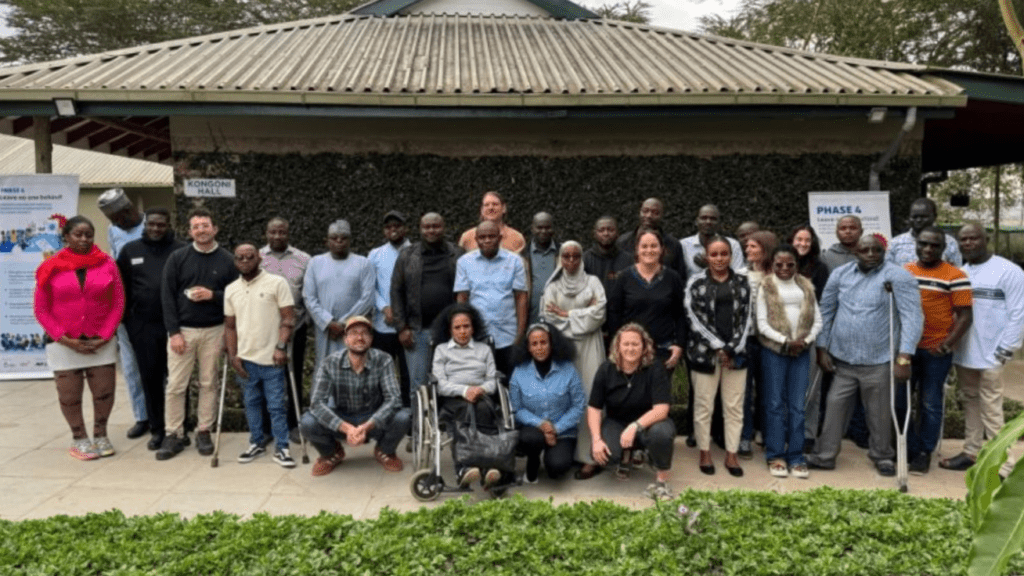
Our collaboration with OPDs across all six project countries remains central to our work. To encourage cross-country knowledge sharing and to strenghten the OPDs’ engagement with humanitarian coordination structures we hosted an inclusive Coordination Workshop in Kenya. This workshop marked the first opportunity for OPDs and the project country teams to come together and exchange experiences.
To make sure that OPDs can influence and contribute meaningfully to humanitarian coordination and decision-making processes, we provide small grants and capacity-building initiatives for our OPD-partners. This support helps OPDs to put their ideas to action, lead their own initiatives and facilitate trainings. Additionally, it enables their involvement in Disabilty Working Groups and humanitarian and refugee coordination meetings, ensuring their expertise is integrated on a broader level.
Integration of Disability-Inclusion at the Global Humanitarian System Level
At the global level, we work to strengthen inter-agency collaboration by sharing tools and best practices. We engage regularly with key networks like the Reference Group on Inclusion of Persons with Disabilities in Humanitarian Action (DRG) and the Disability Advisory Group (DAG). In these efforts, both HI and CBM take on key roles. HI co-chairs the DRG with UNICEF and the International Disability Alliance, while CBM co-chairs Work Stream 1 alongside OXFAM.
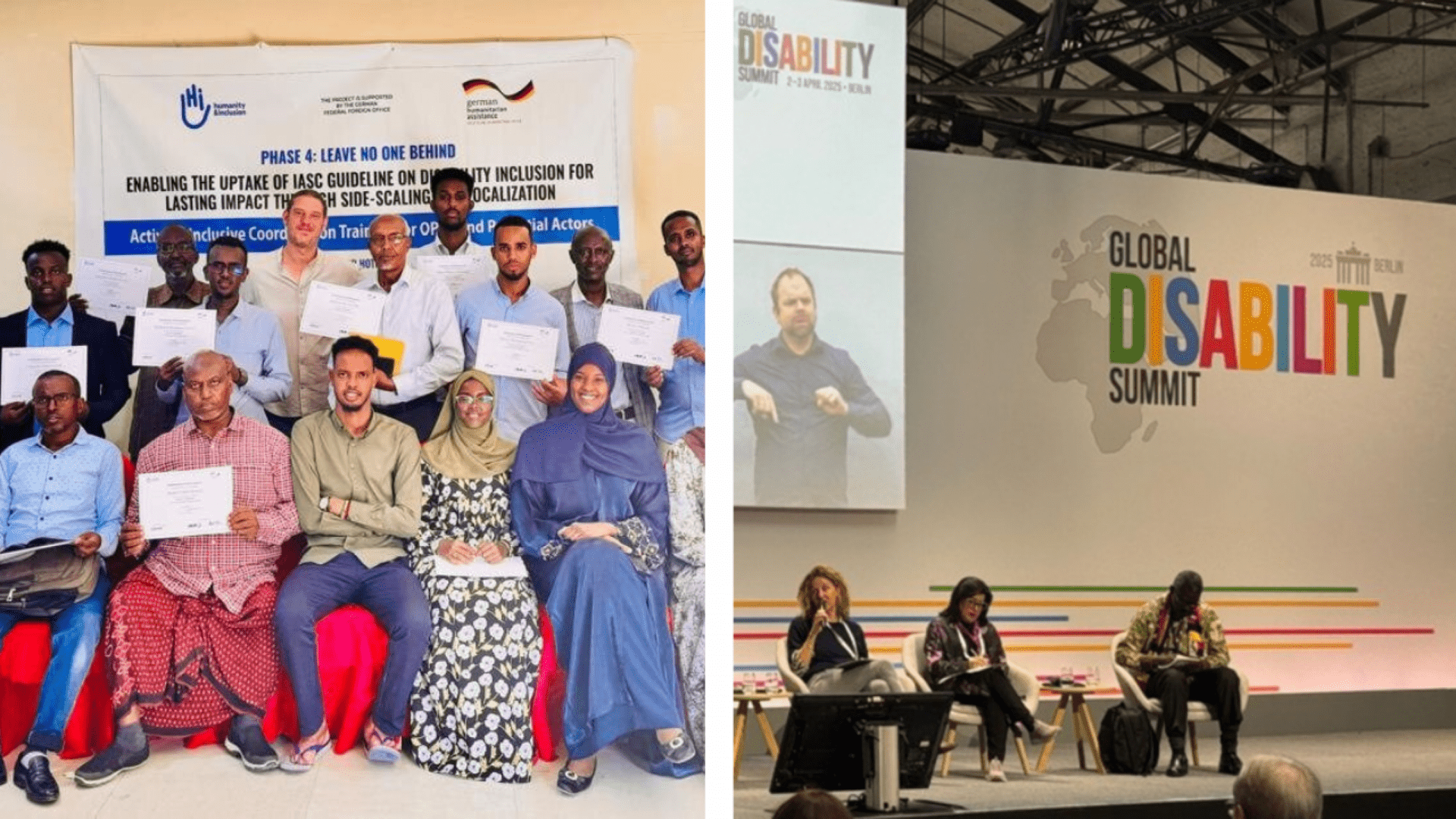
Beyond that, we supported key panels and OPD participation at the Global Disability Summit 2025.Our engagement in the event, provided an important platform for networking and sharing lessons learned from previous project phases.
In addition to our engagement in global forums, we have published and disseminated two researches. Explore these publications on country pooled funds below:
In 2026 we will commission a comprehensive stocktake of the IASC Guidelines on Inclusion, to assess their impact and identify essential efforts still required to ensure that persons with disabilities are effectively reached by humanitarian responses.
As Phase 4 – Leave no one behind! continues, the focus will remain on consolidating results through close partnership with HI and CBM, in collaboration with the International Disability Alliance (IDA), the African Disability Forum (ADF), and national OPDs, to support disability-inclusion in humanitarian action.