
How Local Actors Are Shaping the 2026 Food Security Response in Northeast Nigeria
Category
Capacity Strengthening IASC-Guidelines Nigeria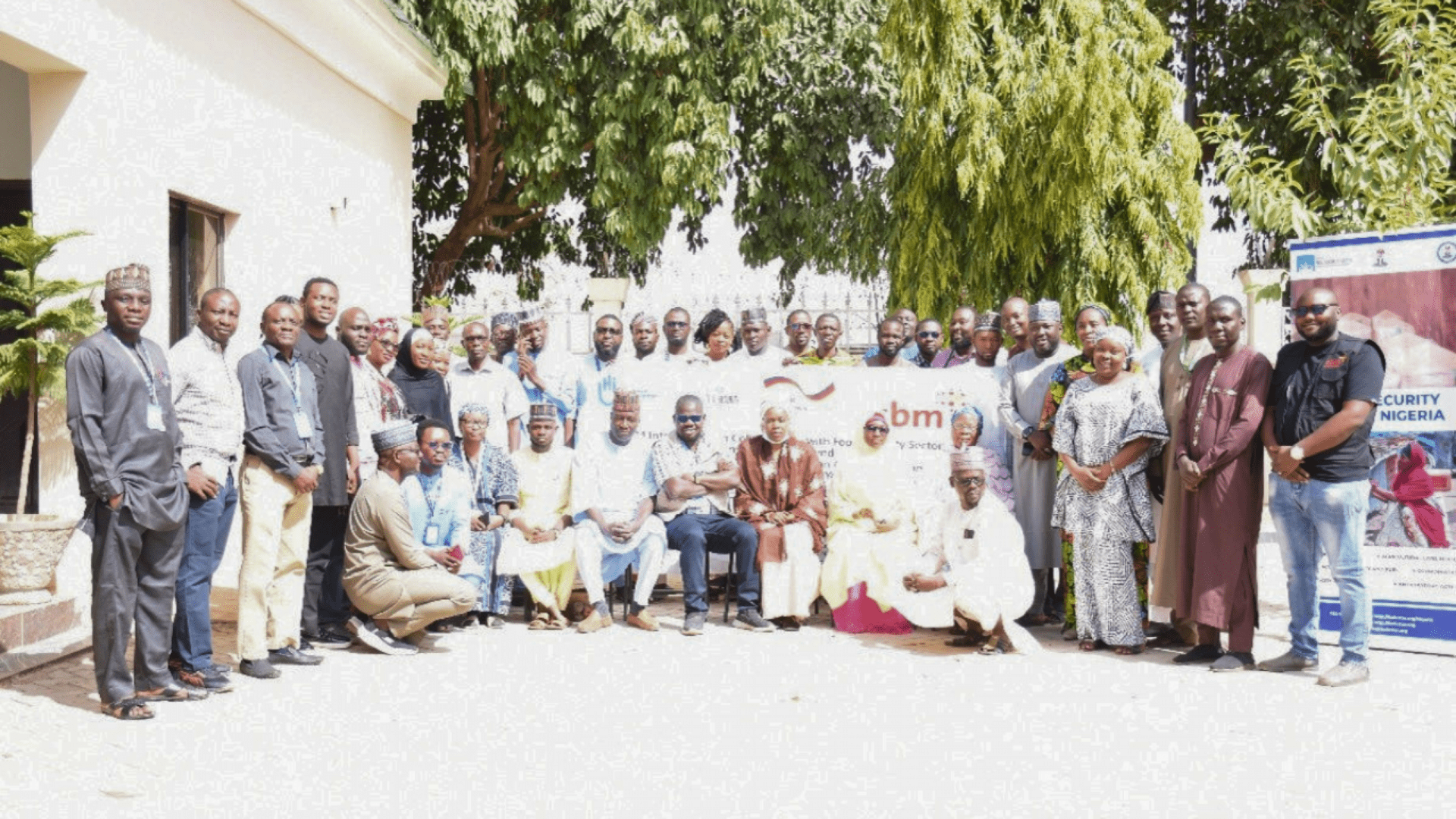
© CBM
As Northeast Nigeria enters the 2026 lean season, food insecurity is worsening across Borno, Adamawa, and Yobe. Families are reducing meals, selling livestock early, and struggling to stretch limited food supplies. In response, CBM, as part of Phase 4 – Leave no one behind! (LNOB), is supporting partners to strengthen disability-inclusion, promote the use of the IASC Guidelines on Inclusion, and advance locally led humanitarian action.
Workshop in Damaturu: Strengthening Local Capacity
At a workshop held in Damaturu, Nigeria on 10 February 2026, CBM’s Country Humanitarian Technical Specialist, Fwangshak Guar, commended participants for their commitment. The training equipped national actors with skills in proposal development, reporting, and evidence-based prioritization, with a focus on reaching the most vulnerable households. Supported by the Food Security Sector, OCHA, WFP, and FAO, the event brought together 48 representatives from 35 national NGOs and 5 Government agencies as part of the dissemination of the 2026 Humanitarian Needs and Response Plan (HNRP).
2026 Outlook: Needs, Gaps, and Priorities
The 2026 outlook remains challenging. Of the 5.9 million people in need of assistance, only 2.5 million can be targeted due to limited resources. With a funding requirement of 516 million US dollars and a 72 percent gap, declining support threatens the scale of food and livelihood interventions. Partners noted that shrinking resources requires stronger prioritization and increased national leadership.
Strategic Objectives and Lessons from Adamawa
The 2026 HNRP outlines three strategic objectives, including a transition toward nationally led humanitarian coordination. During the workshop, participants reviewed targeting tools, assessments, and early action approaches, drawing lessons from Adamawa’s anticipatory initiative in 2025, which supported 400,000 people and helped reduce harmful coping strategies.
Building Resilience and Localization in Practice
Participants also discussed resilience-building such as agricultural inputs, livestock support, cash-for-work, and multi‑purpose cash transfers. Although partners reached 1.6 million people during the last lean season, funding gaps continue to limit coverage. Strengthening systems for localization was another priority, with participants learning to use the Response Planning and Monitoring system to improve transparency and alignment with sector priorities.
The workshop marked an important step toward a more locally led humanitarian response in Northeast Nigeria. With needs rising and resources declining, empowering national actors is essential for creating a more responsive, sustainable, and community‑centered system.
Text by Fredrick Aduga, CBM, Nigeria