
Driving Inclusion Forward: Inclusive WASH programming starts with inclusive data collection tools
Category
General South Sudan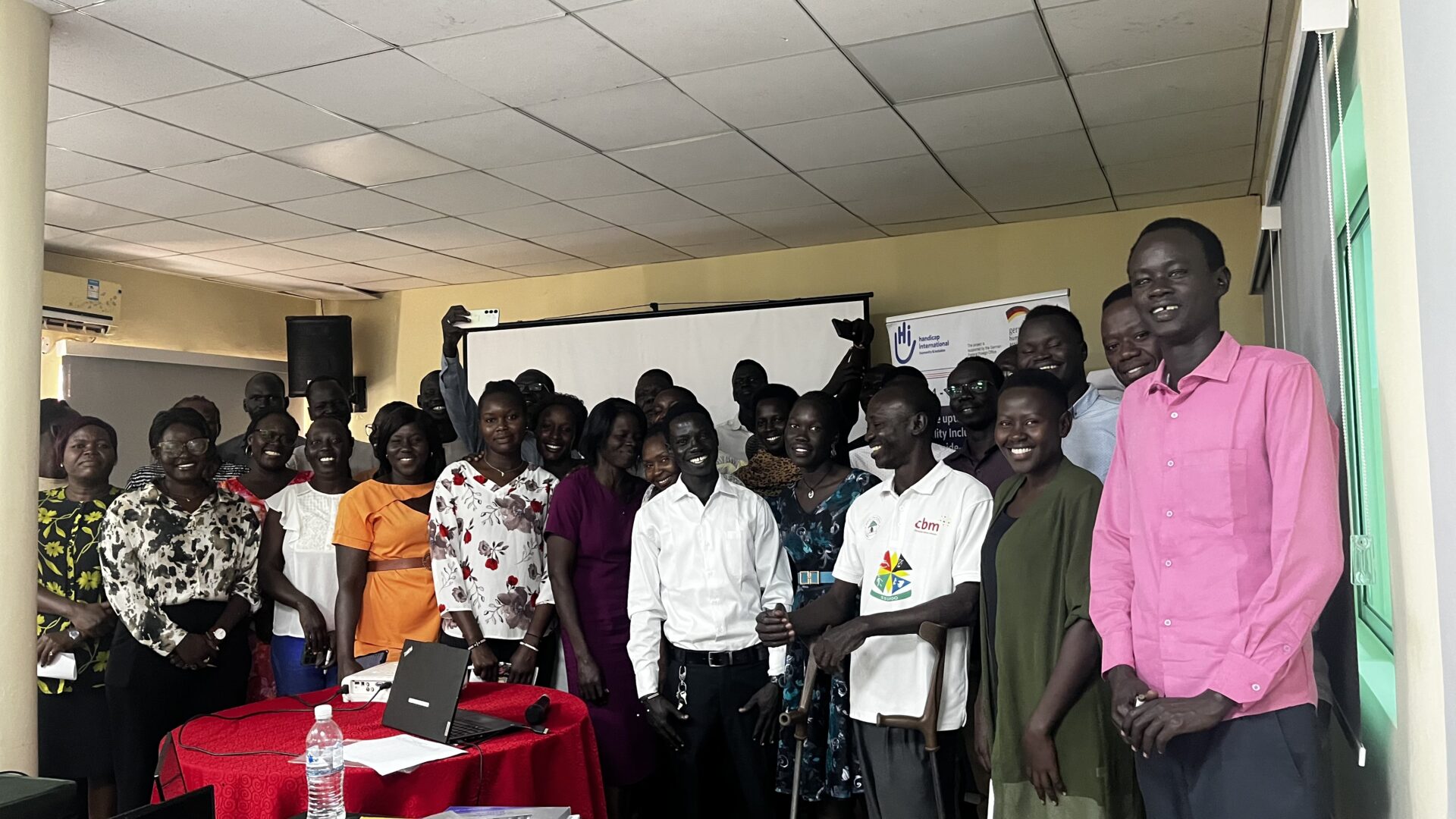
© Seppora/ HI
From August 26 to 28, 2025, Phase 4 – Leave no one behind! project South Sudan team conducted a three-day Inclusive Water, Sanitation, and Hygiene (iWASH) training in Juba. The training brought together 46 WASH partners (27 men, 19 women, and 3 persons with disabilities) from national and international non-governmental organizations (NGOs), United Nations (UN) agencies, and Organizations of Persons with Disabilities (OPDs). The training aimed to strengthen the capacity of these partners to design and implement services that are accessible and responsive to the needs of everyone, including persons with disabilities, women, children, and older people.
The training was tailored to the needs and interests of WASH actors using the Inclusive WASH package and the innovative Review, Adapt, and Action Learning Laboratory (RAAL Lab) methodology. The RAAL Lab is an interactive process that enables participants to jointly review, develop, and adapt existing assessment tools, aligning them with the Inter-Agency Standing Committee (IASC) Guidelines on the Inclusion of Persons with Disabilities in Humanitarian Action.
Topics covered included:
- Module 1: Introduction to the concept of disability, intersectionality, barriers, and heightened risks in humanitarian WASH action
- Module 2: Introduction to the IASC Guidelines on the Inclusion of Persons with Disabilities in Humanitarian WASH Action
- Module 4: Accessibility, universal design, and reasonable accommodation in the WASH context
- Module 5: Introduction to the must-do actions and the twin-track approach
Participants acquired knowledge and skills from the training content. They also reviewed their assessment tools in practice, identified disability-related gaps, and exchanged experiences about the current challenges and opportunities of incorporating disability into WASH interventions.
During the closing session, a participant emphasized the importance of the training, saying:
“We are ending this training workshop with not only action plans, but also a renewed vision that WASH must be designed for everyone, without exception.”