
From Commitment to Practice: Strengthening Disability Inclusion in WASH through the RAAL Lab Approach
Category
Capacity Strengthening General IASC-Guidelines Somalia & Somaliland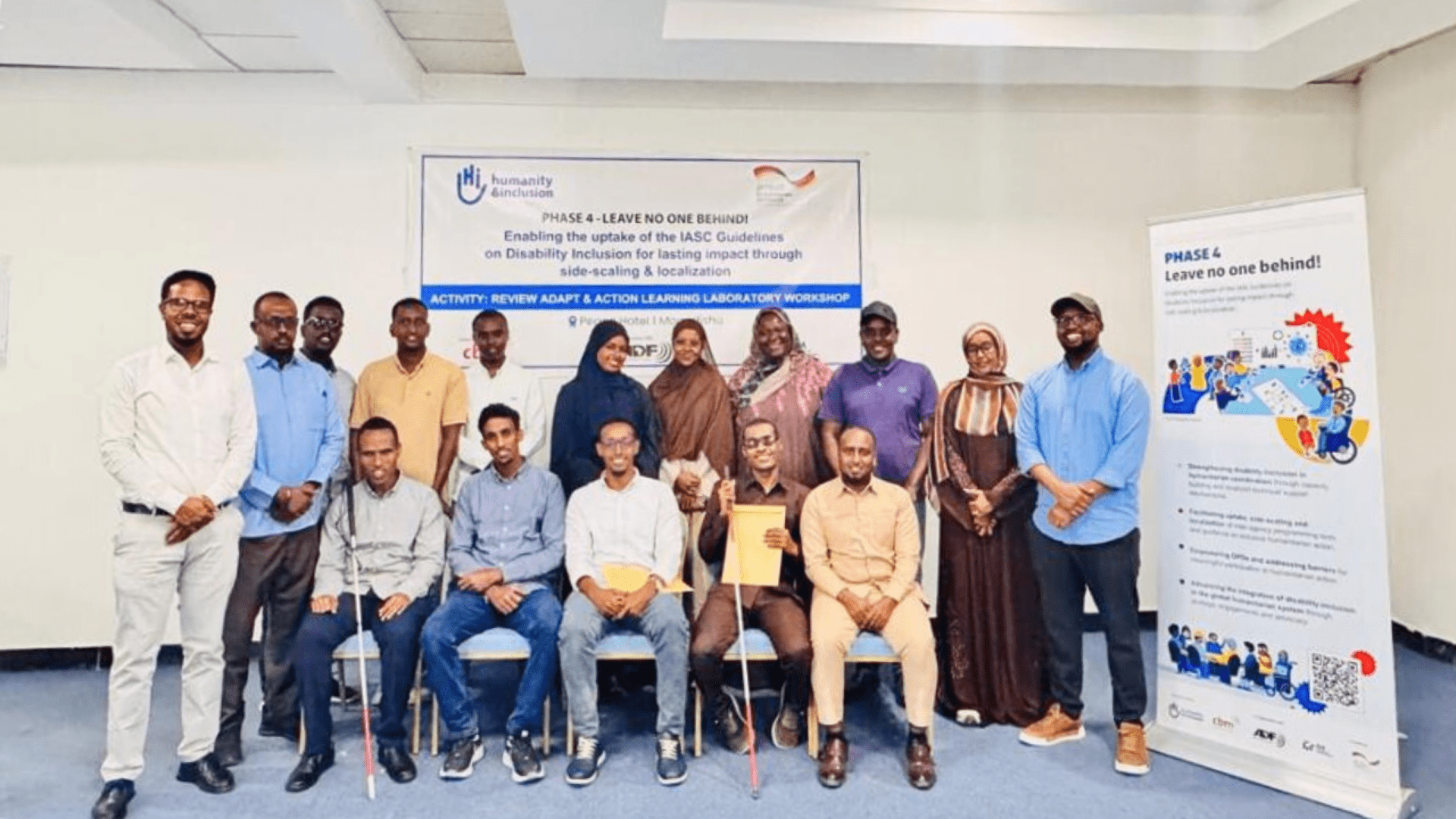
© Amal Abdilahi/HI
From 10th to 12th February in Mogadishu, the Phase 4-Leave No One Behind! (LNOB 4) project team in Somalia/Somaliland organized and facilitated a three-day WASH Review, Adapt, and Action Learning Laboratory (RAAL Lab) workshop aimed at strengthening the technical capacity of WASH actors in the region. The workshop brought together 11 participants representing Organizations of Persons with Disabilities (OPDs), international and local NGOs actively engaged in WASH interventions.
The primary objective of the workshop was to enhance participants’ understanding of how to practically integrate disability inclusion into WASH programming. As part of the launch of the newly developed iWASH package under LNOB Phase 4, through the RAAL Lab methodology, a hands-on, action-oriented learning approach, participants were guided to critically review their existing WASH tools, identify barriers to inclusion, and adapt their approaches to better address the needs of persons with disabilities. This methodology emphasizes practical testing, reflection, and immediate adaptation, allowing participants to translate theoretical concepts into concrete programming improvements.
Workshop Overview
During the sessions, participants explored the five core modules of the Disability Reference Group (DRG). These included
1) an introduction to the concept of disability,
2) an overview of the Inter-Agency Standing Committee (IASC) Guidelines on the Inclusion of Persons with Disabilities in Humanitarian Action;
3) principles of accessibility, universal design, and reasonable accommodation;
4) Four Must-Do Actions (MDAs) for disability-inclusive programming;
5) inclusive project cycle management. Each module was linked directly to WASH programming stages, enabling participants to see how disability inclusion can be systematically embedded rather than treated as an add-on.
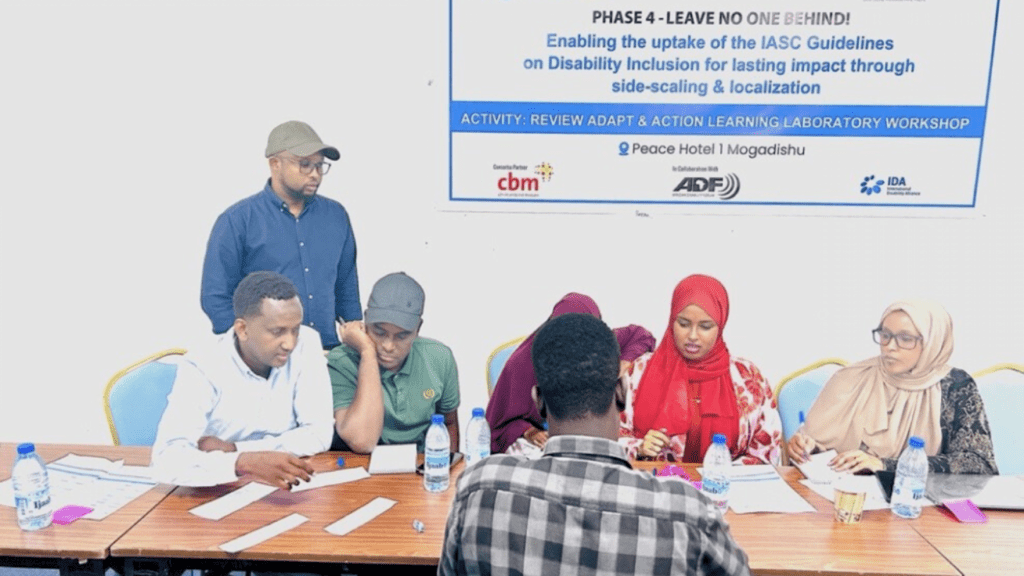
The workshop sessions were highly interactive and participatory, involving group discussions, practical tool reviews, and peer feedback exercises. OPD Polish Humanitarian Action (PAH) presented its multi-sectoral needs assessment tool, which had already undergone a preliminary technical review by the HI team. Participants jointly analyzed the WASH section to identify gaps and opportunities for strengthening disability inclusion.
OPD representatives from DAF & SODEN provided key contextual insights, highlighting barriers faced by persons with disabilities in accessing WASH services and suggesting locally appropriate recommendations. The session concluded with the HI team presenting its technical recommendations and comparing them with the participants’ feedback.
Importantly, the workshop also created space for reflection on coordination and partnership. By bringing together humanitarian actors and OPDs, the RAAL Lab facilitated conversations around shared responsibility, accountability, and opportunities for joint action. Participants discussed how to institutionalize disability inclusion within their organizations and how to sustain collaboration beyond the workshop, particularly through continuous consultation with OPDs during project design and implementation.
Overall, the RAAL Lab workshop contributed to deepening technical knowledge, strengthening practical skills, and reinforcing commitment to inclusive WASH programming. Participants left with clearer strategies for adapting their tools, integrating disability inclusion across the project cycle, and ensuring that WASH interventions are accessible and responsive to all community members. The workshop marked an important step in operationalizing the IASC Guideline at the country level and advancing the principle that inclusive humanitarian action is not optional, but essential to truly leave no one behind.
Training Results
“ It was valuable to be part of this workshop. It provided an opportunity to share experiences and challenges, as well as to connect with counterparts from other organizations. Our country is currently facing a critical humanitarian crisis with limited funding, which highlights the importance of collaboration to achieve greater impact. As an OPD, one of our key roles is to advocate for policy change. So when you hear us speaking out, please know that it is always in support of the rights and inclusion of persons with disabilities.”
Abdirahman Jeilani, Advocacy Manager at Disability Aid Foundation (DAF), and OPD co-chair of Disability Inclusion Working Group (DIWG)
Text by: Amal Abdilahi, Project Manager, Somalia & Somaliland