
From Data to Action: “Phase 4 – Leave no one behind!” (LNOB 4) Enhances Inclusion for Persons with Disabilities in Niger
Category
Capacity Strengthening General Niger Pilot Countries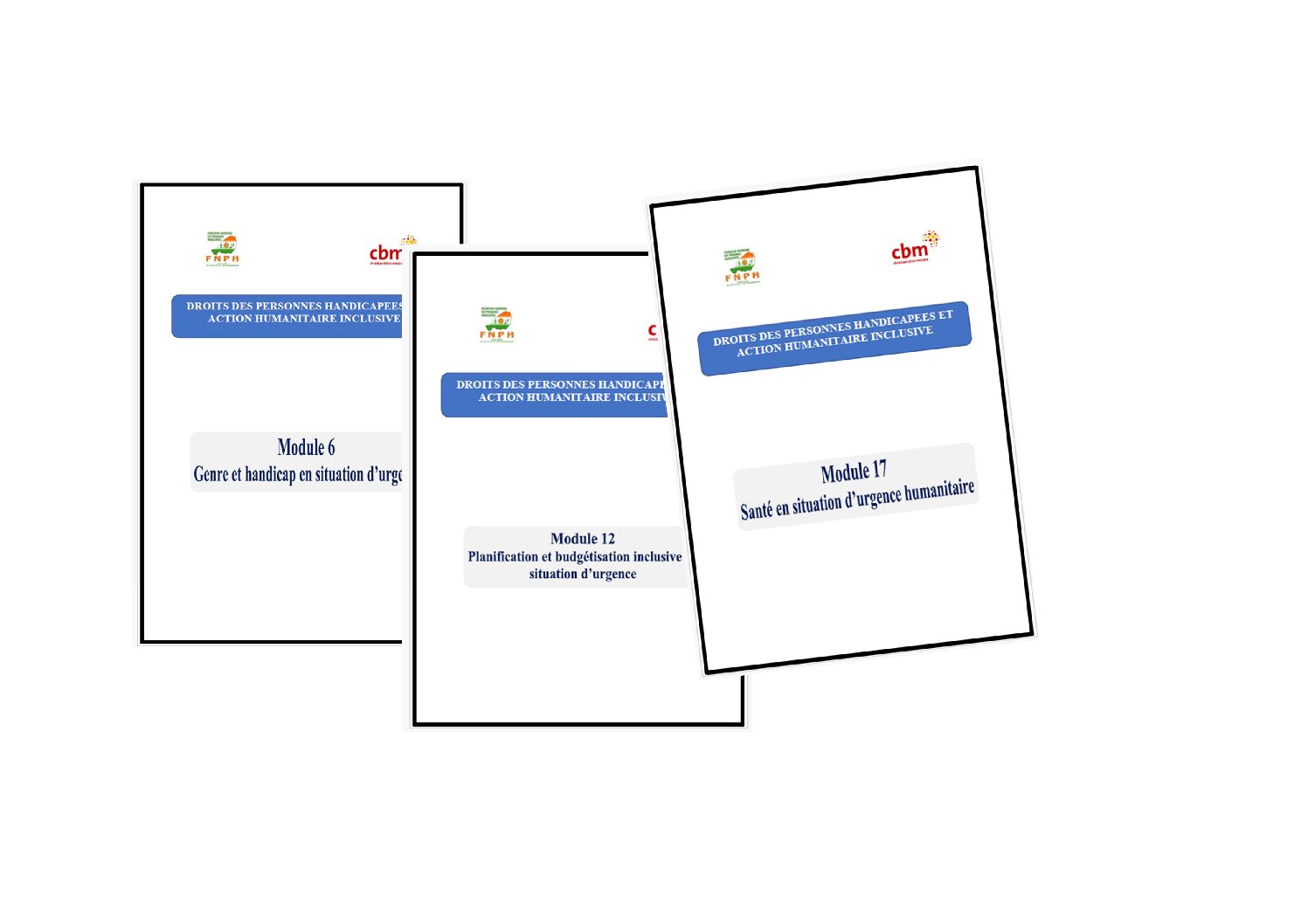
© CBM
With the LNOB 4 project, CBM and FNPH (Fédération nigérienne des personnes handicapées) have developed 18 modules in the form of training booklets on inclusive humanitarian action for persons with disabilities. These modules, which cover the various points necessary for facilitation, are adapted to the context of Niger and the capacity of the OPD (Organisation of persons with disabilities) focal points at the regional sections of FNPH.
The 18 modules are:
Module 1 Des besoins aux droits
Module 2 Comprendre le handicap
Module 3 Cadre juridique Intern et national
Module 4 Principes généraux et principes humanitaires
Module 5 Obligations générales de la CDPH
Module 6 Genre et Handicap en situation d’urgence
Module 7 Egalité et non discrimination en situation d’urgence
Module 8 Conception universelle et aménagement raisonnable
Module 9 Accès des PH en situation d’urgence
Module 10 Données statistiques des PH en situation d’urgence
Module 11 Rôles des OPH dans l’action humanitaire
Module 12 Planification et budgétisation en situation d’urgence
Module 13 Plaidoyer en situation d’urgence
Module 14 Communication inclusive en situation d’urgence
Module 15 Facilitation inclusive
Module 16 Education en situation d’urgence
Module 17 Santé en situation d’urgence humanitaire
Module 18 Réadaptation et aides techniques en situation d’urgence
These 18 modules will enable local FNPH facilitators to co-facilitate training/awareness-raising sessions and equip humanitarian actors with essential content that is concise and tailored to the context and target audience. A validation workshop brought together 35 people, including 21 people with disabilities (4 women and 17 men).
Collecting Disability-Disaggregated Data
The FNPH conducted a process of collecting disaggregated data on persons with disabilities and identifying their specific needs in eight humanitarian municipalities in Niger using the Kobocollect application. This data collection, which served as a means of strengthening the capacities of OPDs, provides evidence-based arguments for advocacy. This data will also be used to develop inclusive projects and programs for persons with disabilities, both at the level of OPDs and other humanitarian actors.
Strengthening OPD Capacities at National and Regional Level
In addition, the LNOB4 team organized a capacity-building workshop for national and regional members of the FNPH on inclusive humanitarian issues with the participation of 32 persons, thereof 17 persons with disabilities. At the end of this training:
- The capacities of OPDs on the development, implementation, monitoring, and evaluation of humanitarian projects and programs (iPCM) are strengthened.
- Participants have a better understanding of how to collect disaggregated data on persons with disabilities according to disability type and are better able to support humanitarian actors in identifying the specific humanitarian needs of persons with disabilities;
- Participants can use co-facilitation and training strategies based on existing practices (experience at the national and regional levels of the FNPH) in the humanitarian field;
- Participants from regional sections are supported with awareness-raising formats with a view to removing barriers for persons with disabilities in humanitarian action in their areas;
Participants can better contribute to embedding inclusion in the humanitarian response in their areas. - LNOB4 contributed to the organization of a national workshop to mobilize and raise awareness among persons with disabilities and their communities about the 2025 General Population and Housing Census (RGPH). This activity aimed to raise awareness among persons with disabilities and their communities and help them understand the importance and opportunities of the RGPH for promoting their rights so that they can actively participate in the census. This will prevent the number of persons with disabilities from being underestimated in the country’s official figures, which are systematically used in humanitarian and development planning.
Text by CBM Niger