
Capacity Building on Inclusive Data Collection and Analysis in Niamey: LNOB Phase 4 Training
Category
Capacity Strengthening GDS 2025 General Niger Pilot Countries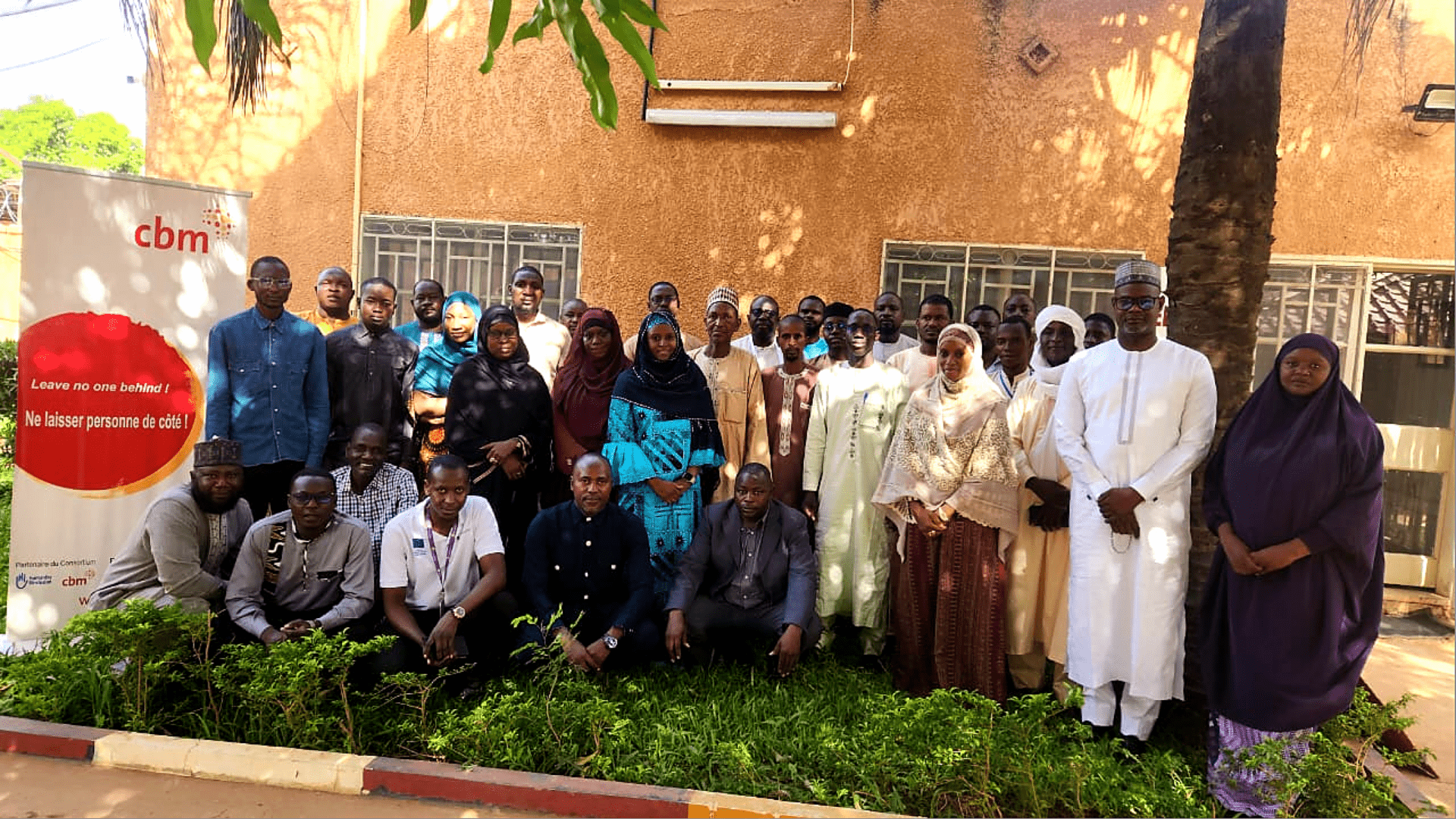
© CBM
As part of capacity-building efforts for stakeholders in the Population Movement sub-group of the WASH Cluster, a training session was organized by the Phase 4 – Leave no one behind! (LNOB 4) project from June 8 to 10, 2026, at CBM/Niger to improve the collection, analysis, and use of inclusive data related to population displacement in Niger. The main objective was to equip participants with the skills needed to produce reliable, inclusive data that is useful for humanitarian decision-making.
Promoting Accountability to Affected Populations
The training began with a module on accountability to affected populations (AAP). Participants explored the fundamental concepts of accountability, the humanitarian context of displacement, and the principles that promote inclusive assistance. Through interactive presentations and practical exercises, they deepened their understanding of the role of community participation, access to information, and consideration of the specific needs of people with disabilities in ensuring the quality of humanitarian responses.
Enhancing Inclusive Data Collection Through Digital Tools
The second module focused on accountability mechanisms and the data collection tool. Participants were introduced to using the Kobo Toolbox data collection tool to gather high-quality, inclusive information. Discussions also addressed inclusive complaint mechanisms, feedback processes, and community participation, while emphasizing the integration of considerations related to gender, disability, and protection. Demonstrations and simulations enabled participants to better master inclusive data collection methods tailored to humanitarian contexts.
Conducting Inclusive Humanitarian Needs Assessments
The third module focused on inclusive humanitarian needs assessment, particularly in the WASH sector. Participants explored various methodological approaches—both qualitative and quantitative—used to identify the needs of displaced populations, including people with disabilities. Database exercises and case studies provided an opportunity to deepen participants’ understanding of techniques for managing and monitoring migration flows, analyzing disaggregated data, and producing reports. Emergency simulations reinforced practical skills in collecting, analyzing, and reporting inclusive information.
Strengthened Skills for Evidence-Based Humanitarian Action
By the end of the training, participants had improved their knowledge of accountability, inclusion, and community participation mechanisms. They also strengthened their technical capacities in digital data collection, analysis of population movements, and the preparation of reports to effectively guide humanitarian interventions. This training will thus contribute to better consideration of the needs of affected populations—including people with disabilities—and to a more inclusive, coordinated, and evidence-based WASH response.
Supporting More Effective and Targeted WASH Services
This training is expected to enable stakeholders in the Population Movement sub-group to access more reliable, inclusive, and actionable data to anticipate needs, better target assistance, and provide WASH services that are better suited to displaced and vulnerable populations in Niger.
Text by Aida Soumana Hamani, CBM, Niger