
© HI
For years, Organizations of Persons with Disabilities (OPDs) in Somaliland struggled to have their voices heard within humanitarian coordination spaces. Forums were often inaccessible, and critical decisions about aid planning and delivery were made without meaningful input from persons with disabilities.
Leaders like Mowlid Mohamed Odowaa, Executive Director of the Somaliland Blind Organization (SOBO) and a member of the Somaliland National Disability Federation (SNDF), found themselves excluded from processes that directly affected their communities. That narrative is now changing.
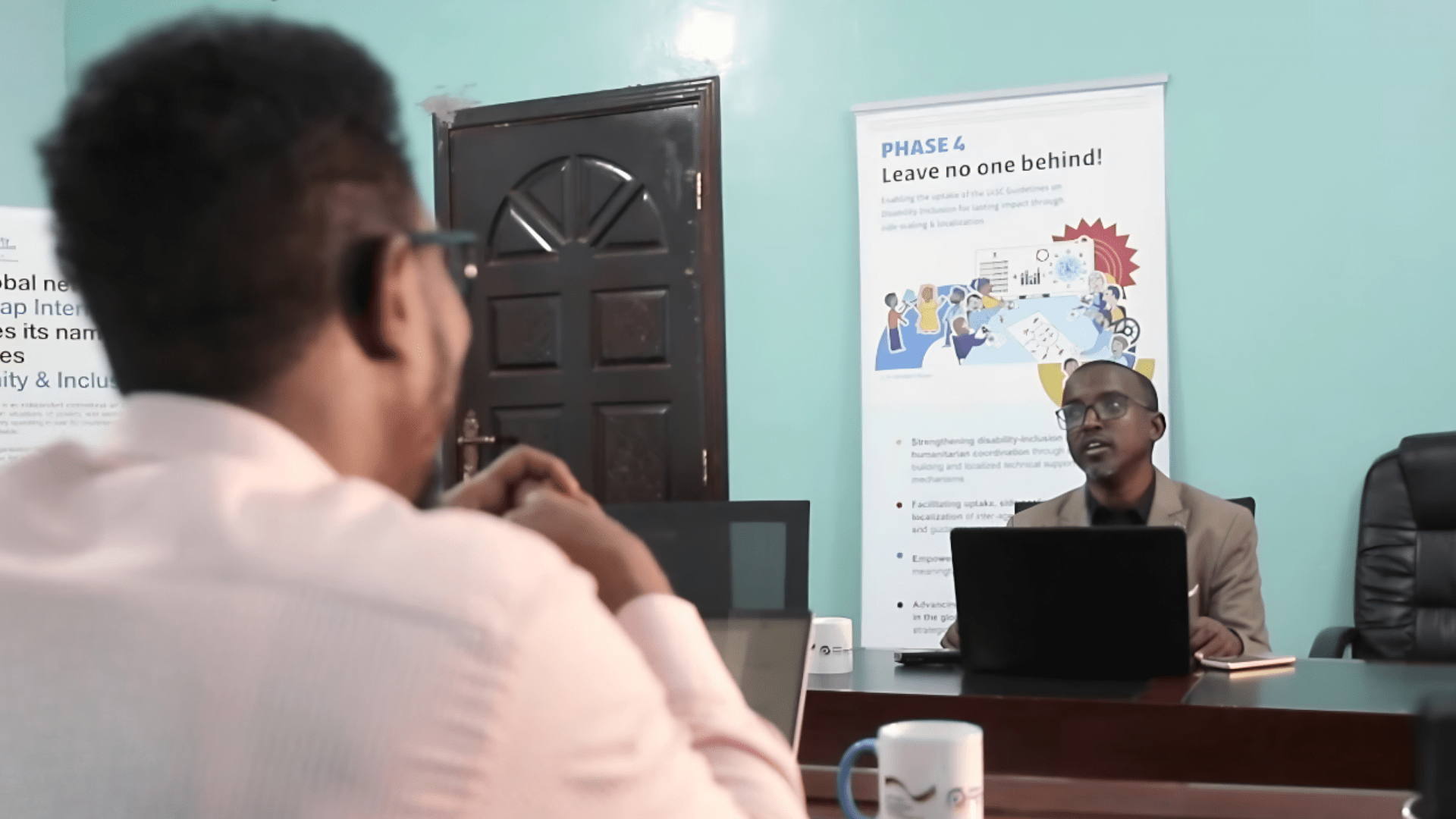
Through the “Leave No One Behind!” Project – Phase 4, implemented by Humanity & Inclusion (HI) and funded by the German Federal Foreign Office (GFFO), OPDs are gaining the tools and opportunities needed to shape humanitarian action. The initiative focuses on strengthening institutional capacity, promoting inclusive coordination, and ensuring that disability inclusion becomes a core component of humanitarian response.
More accessible
Mowlid’s journey reflects this transformation. Before participating in the project, he had limited understanding of how humanitarian systems functioned or how to influence them. Through targeted training on the Inter-Agency Standing Committee (IASC) Guidelines for Inclusion of Persons with Disabilities in Humanitarian Action, inclusive coordination mechanisms, and technical task force engagement, he developed the knowledge and confidence to step into leadership spaces.
Today, Mowlid actively co-facilitates technical workshops on inclusive Water, Sanitation, and Hygiene (WASH) and participates in the Somaliland Disability Inclusion Task Force. Importantly, SOBO now holds a formal seat in both the WASH Sector and Protection Cluster coordination meetings. This representation ensures that disability perspectives are integrated into sectoral planning, needs assessments, and response strategies. By incorporating lived experiences, humanitarian interventions are becoming more accessible, accountable, and effective.
Broader Movement
Beyond coordination forums, Mowlid contributes to broader policy reform. He plays a key role in shaping Somaliland’s National Disability Inclusion Act, collaborating with the Ministry of Labour, Social and Family Affairs (MoLSAF) to strengthen disability rights and promote accountability among humanitarian actors. His technical capacity-building sessions for ministry staff further institutionalize inclusive practices. Reflecting on his progress, Mowlid emphasizes that this shift represents more than personal growth. It signals the emergence of a broader movement—one where people with disabilities move from passive recipients of aid to active decision-makers. Mowlid’s journey is a testimony of when OPDs are equipped with knowledge, resources, and access, they can transform humanitarian systems to truly leave no one behind!
This article was also published as part of the annual report 2025 by the Somali NGO Consortium.