
Strengthening OPD Capacity for Inclusive Food Security in South Sudan
Category
Capacity Strengthening General Pilot Countries South Sudan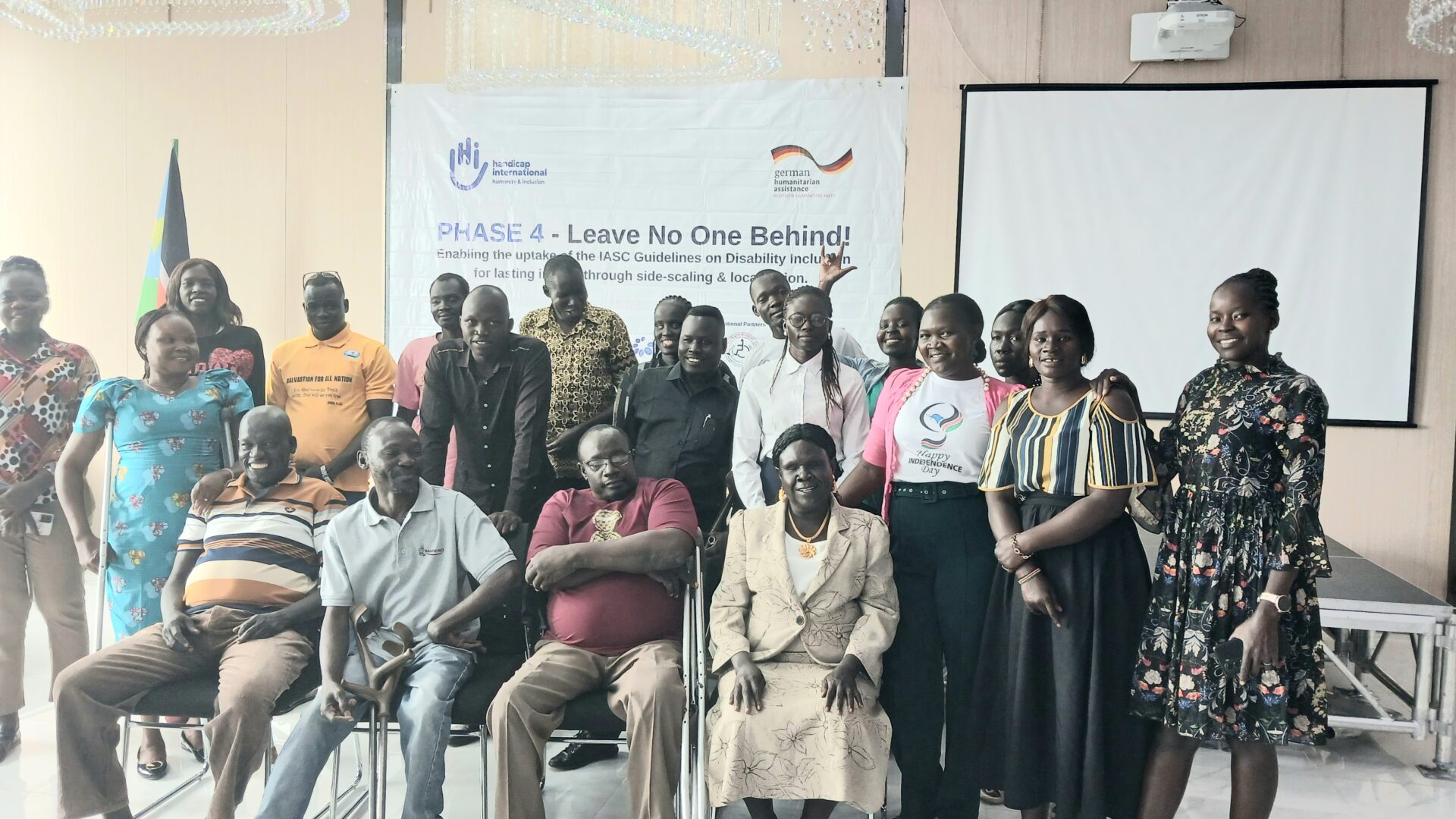
For many persons with disabilities, accessing food assistance and livelihood opportunities involves barriers that often go unnoticed. To strengthen the role of Organizations of Persons with Disabilities (OPDs) in addressing these challenges, HI South Sudan supported OPD leaders in Wau and Juba to build their knowledge, confidence and advocacy skills for disability-inclusive food security programming.
Strengthening OPD Leadership for Inclusive Food Security
For many persons with disabilities in South Sudan, accessing food assistance and livelihood opportunities can involve challenges that others may never see.
A distribution point may be too far away. A registration process may not provide accessible information. A market may be physically inaccessible. Important messages may not be available in formats that everyone can understand. Sometimes, the greatest barrier is simply not being included in decisions that directly affect their lives.
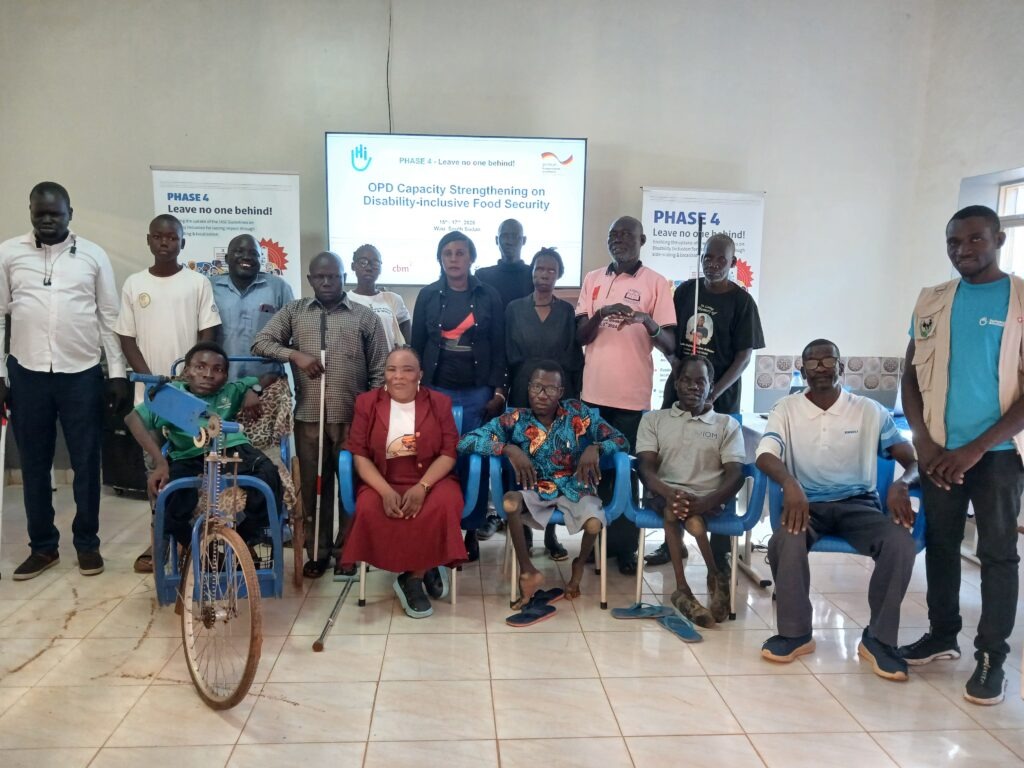
The Humanity & Inclusion (HI) South Sudan, Phase 4 Leave no one behind project team conducted a capacity strengthening workshop for OPD leaders in Wau and Juba from 15th – 17th July, and 4th – 6th August 2026 respectively. The workshop brought together 16 representatives of OPDs within Wau with the aim of building the capacity of the OPDs to understand, own and use the inclusive Food Security package as well as gain confidence in co-facilitating and training other OPDs and partners using the package.
Building Confidence and Strengthening Advocacy
For participants, however, the workshop was about more than learning new concepts. It was an opportunity to share experiences, build confidence, and strengthen their collective voice to ensure meaningful participation of persons with disabilities in FSL sector.
“Before this training, we knew that persons with disabilities were facing many challenges, but we did not always know how to explain these challenges to humanitarian organizations and refer to international and national legal frameworks to back up our advocacy. Now we have a better understanding of how to advocate for inclusion and participate in food security programmes,”
said John Akot, a representative of the Union of Persons with Disabilities in Wau.
Promoting Meaningful Participation
Participants explored practical ways to make Food security programmes more disability-inclusive, from ensuring that information is accessible, to making distribution sites easier to access, engaging more actively with Food Security and Livelihood actors, and creating opportunities for persons with disabilities to participate in assessments, targeting, monitoring, and feedback mechanisms. For OPDs, meaningful participation means having a seat at the table—not being invited only after decisions have already been made.
“As a result of this training, we want Food Security actors to consult us from the beginning. We know the challenges faced by persons with disabilities to access Food Security because we live these experiences every day. Our role should not only be to receive assistance, we should also participate in the design of programmes,”
said Roda, from South Sudan Union of Persons with Disabilities (SSUPD), Juba.
Building Stronger OPDs for Inclusive Humanitarian Action
The workshop strengthened connections and peer exchange among OPDs, increased their knowledge of inclusive Food Security, and created opportunities for organizations to learn from one another and work collectively to promote disability inclusion.
The workshop demonstrated that capacity strengthening of OPDs contributes to the wider objective of building stronger and more representative OPDs that can engage effectively with Food Security actors to ensure that humanitarian food security responses are more disability-inclusive, accountable, and responsive to the diverse needs of affected communities including persons with disabilities.
Text by: Obale Musa William, Project Manager, South Sudan