© Seppora/HI
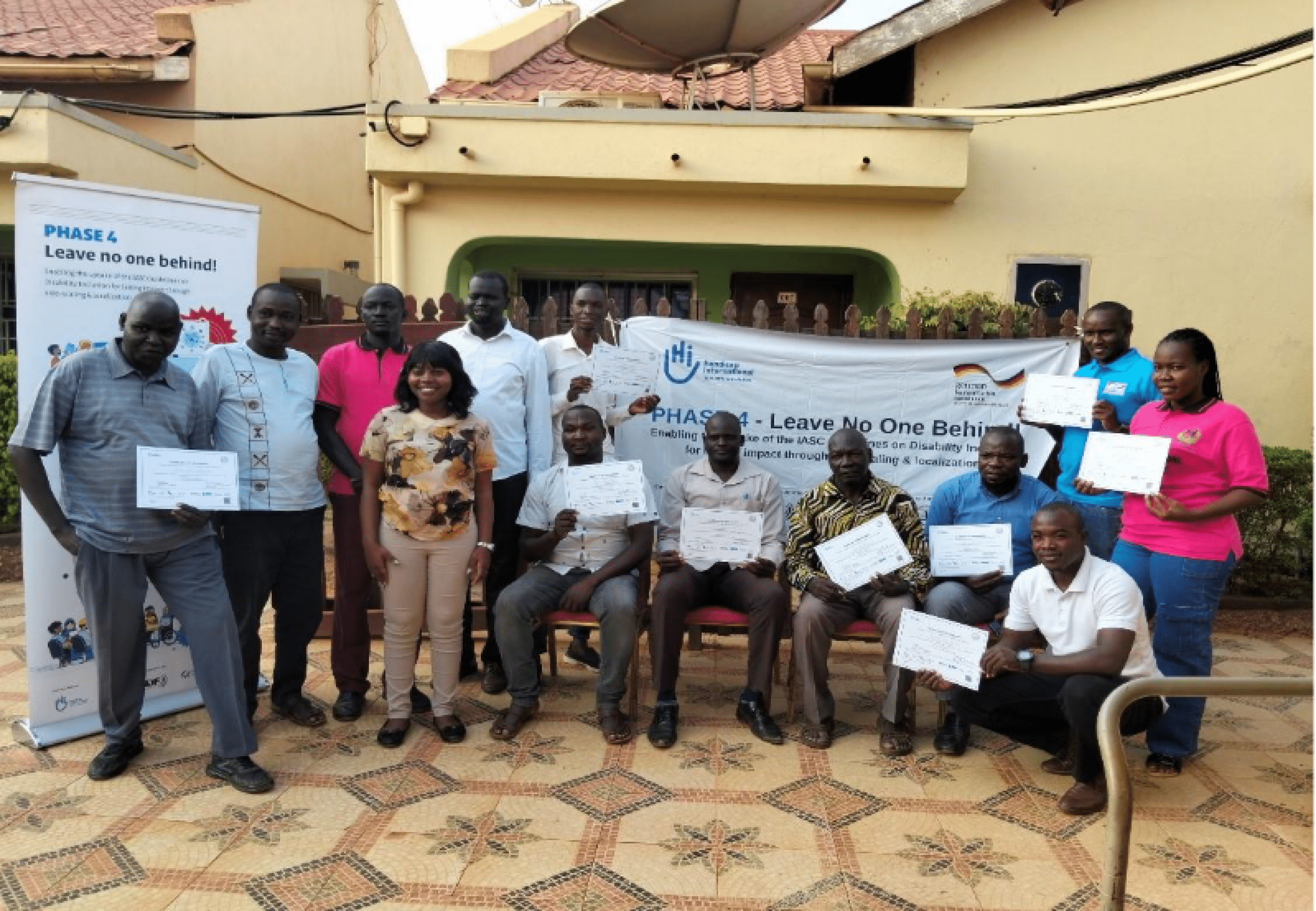
The Phase 4 – Leave no one behind! project in South Sudan conducted a three-day Training of Trainers (ToT) workshop for WASH Disability Focal Points in Wau, Western Bhar-El-Gazel State, South Sudan from 18th – 20th November 2025. The workshop brought together 14 WASH Disability Focal points drew from National and International non-governmental organizations, Government representatives, and Organizations of Persons with Disabilities. The training aimed at strengthening the technical capacity of focal points to advance disability inclusive Water Sanitation and Hygiene (IWASH) response and to ensure access to and meaningful participation of people with disabilities in WASH programming.
Participants were selected based on their previous participation in the inclusive WASH RAAL-Lab training, their active roles in community-level WASH initiatives and their responsibility not only to champion disability inclusion within their respective institutions, but also supporting other agencies, clusters and existing working groups to mainstream disability in their interventions.
Facilitators used a mix of methodologies, including group discussions, presentations, quizzes, video clips, and hands-on demonstrations. These methods were applied to explore key concepts such as disability and intersectionality; Must-Do Actions; the twin-track approach; accessibility; Universal Design; and reasonable accommodation. The training also covered the Reach, Enter, Circulate, and Use (RECU) approach; inclusive accountability to affected populations; a practical review of the assessment tool using the review grid; and step-by-step RAAL-Lab preparatory processes and facilitation skills.
The workshop also highlighted the significance of collaboration between WASH actors and Organization of Persons with Disabilities as stipulated in the IASC guidelines, ensuring that all phases of the project cycle are inclusive.
Speaking during the closing remarks, the representative from the Department of Public Utilities (DPU), the state-level WASH Cluster lead, commended the participants for their commitment and emphasized the critical role of trained focal points in promoting disability-inclusive programming. Livio noted:
“The ToT has given us insight on how to include Persons with disabilities in our WASH interventions and ensure access to safe and clean water for vulnerable individual including persons with disabilities”.
The Director of the Relief and Rehabilitation Commission (RRC) also appreciated the participants for their active engagement, as well as Humanity & Inclusion for initiating the training for WASH partners on inclusive WASH. He stated:
“My appeal to Humanity & Inclusion is to side-scale this training to education sector because many children with disabilities can’t access education due to inaccessible school infrastructures,”.
In summary, the Training of Trainers marks an important step for Disability Inclusion Focal Points to cascade knowledge to their respective organizations, clusters, and working groups, as well as to provide inter-agency technical support through the review of assessment tools or guidelines upon request. This initiative contributes to improved access to safe, sufficient, and clean water for everyone, in line with national WASH strategies and global commitments such as Sustainable Development Goal 6.