
Turning Disability Inclusion into Practice
Category
Capacity Strengthening General IASC-Guidelines Pilot Countries South Sudan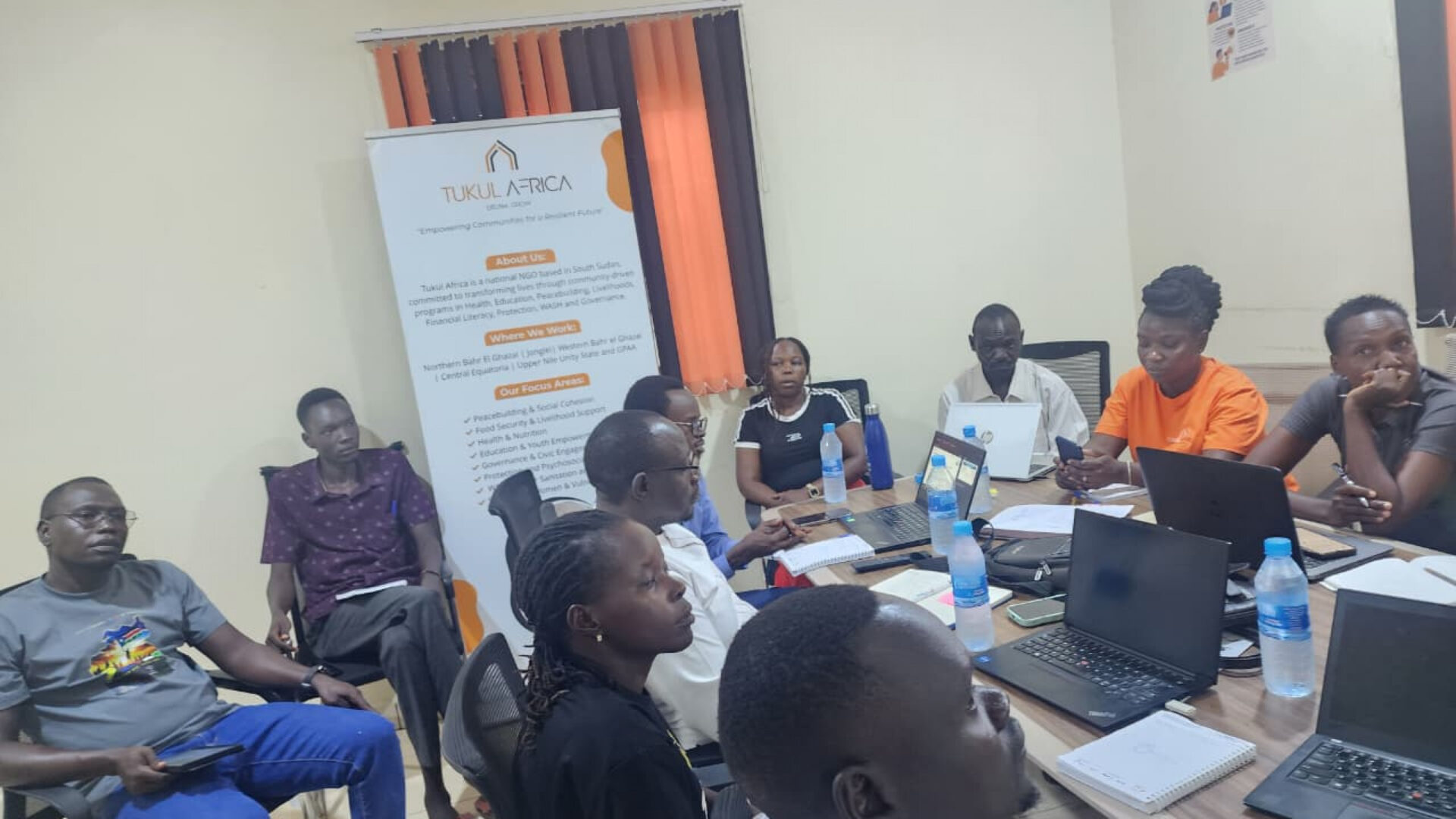
© Vivian / Tukul Africa South Sudan
Disability inclusion becomes meaningful when it leads to practical change. In South Sudan, Humanity & Inclusion (HI), together with the South Sudan Association of Physically Impaired (SSAPI) and the Technical Support Group on Disability Inclusion, supported Tukul Africa in strengthening disability-inclusive humanitarian programming. The exchange helped staff identify barriers, explore solutions and translate commitment into action.
From Commitment to Action
Disability inclusion becomes meaningful when it moves beyond words and translates into practical changes that enable everyone to participate, contribute, and benefit equally.
With this spirit, Humanity & Inclusion (HI), South Sudan Phase 4 – Leave no one behind! team in collaboration with the South Sudan Association of Physically Impaired (SSAPI) and the Technical Support Group on Disability Inclusion, on 31st July, provided technical support to Tukul Africa to strengthen disability inclusion within its programmes and operations using the Disability Reference Group modules.
Strengthening Capacity Through Technical Support
The engagement was requested by the senior management of Tukul Africa to strengthen the capacity of its staff on disability-inclusive humanitarian action, creating space to identify barriers that can often go unnoticed and explore practical solutions to address them. Discussions focused on making programmes more accessible, strengthening meaningful participation of persons with disabilities, and ensuring disability inclusion is considered throughout their programme cycle and aligning to the IASC Guidelines recommendations.
“The technical support was more than technical exercise, it was an opportunity to listen, learn and work together towards a response where persons with disabilities are not simply beneficiaries, but active participants and partners in shaping solutions that affect their lives”.
Executive Director, Tukul Africa, Juba, South Sudan.
The initiative is part of Phase 4 – Leave no one behind! focusing on providing technical support on disability-inclusive humanitarian action and enabling the uptake of IASC Guidelines on disability-inclusion through side scaling and localization which reflects the growing commitment among partners in South Sudan to move beyond awareness towards practical, accountable and sustainable disability inclusion.
Key Outcomes and Next Steps
The in-house technical support not only increased the knowledge of the staff on disability-inclusive humanitarian action especially the twin-track approach and Must Do Actions but also strengthened connections and peer exchange between Tukul Africa and South Sudan Association of Physically Impaired for future collaboration and also the motivation to continue being part of the Technical Support mechanism and ensure sustainability of the gains realized beyond the LNOB project.
Text by: Obale Musa William, Project Manager, South Sudan