
LNOB Consortium and OPD Partners Gather in Cameroon to Exchange on Disability-Inclusive Humanitarian Coordination
Category
Cameroon General Niger Nigeria Pilot Countries Somalia & Somaliland South Sudan Uganda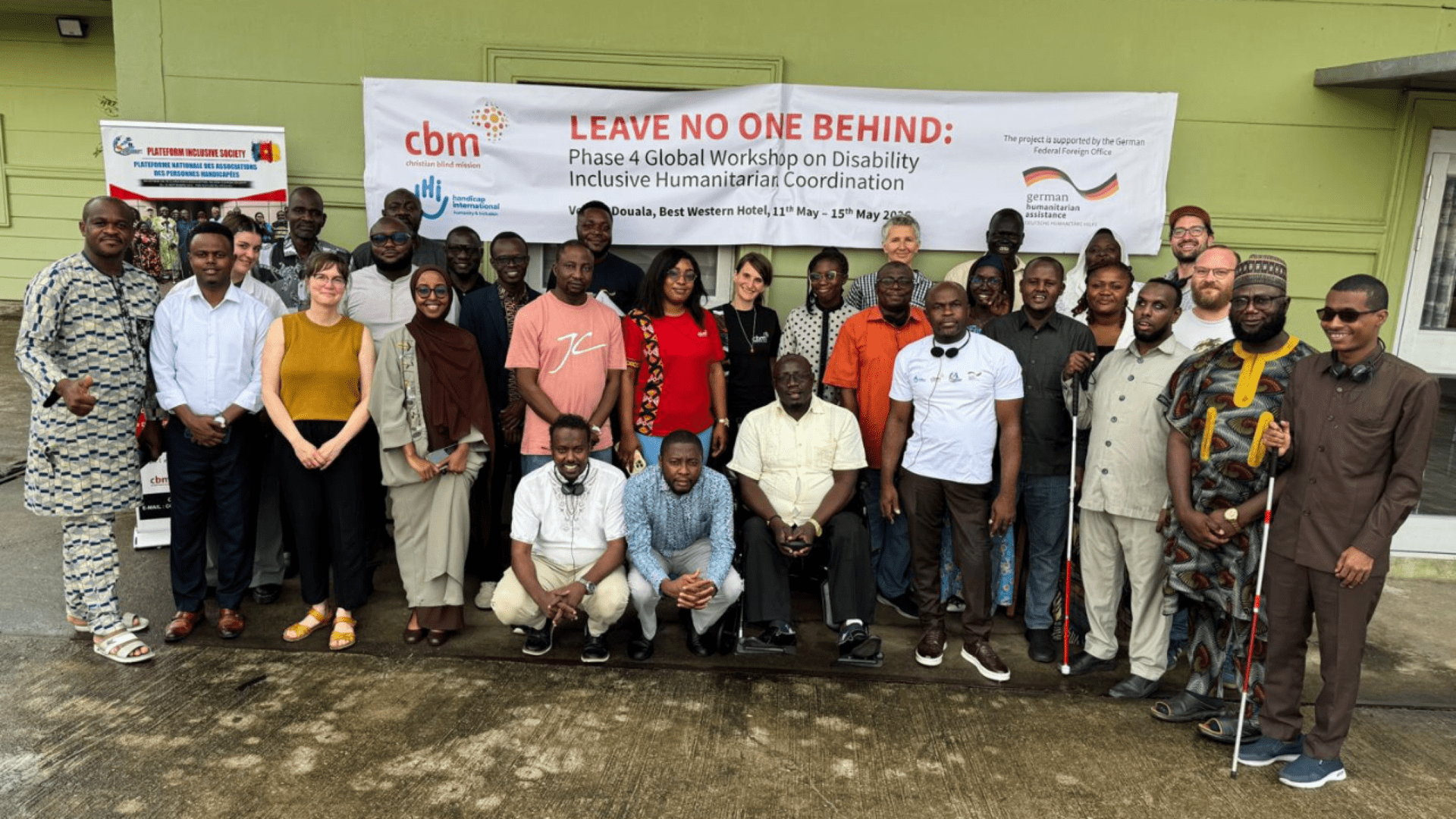
© HI
From 11–15 May 2026, the Leave no one behind! (LNOB) project team met in Cameroon for its second consortium workshop. The five-day event brought together representatives from HI, CBM, and all six country teams, as well as OPD-partners to exchange, reflect, strategize, and advance disability-inclusion in humanitarian action and coordination.
The workshop featured relevant topics for disability-inclusive humanitarian action and covered all four results that guide Phase 4– Leave no one behind!: disability inclusion in humanitarian coordination, uptake and localisation of developed tools and guidance, partnerships with Organizations of Persons with Disabilities (OPDs), and advancement of disability inclusion in the global humanitarian system. Discussions were framed by the IASC Guidelines on Inclusion, the ongoing humanitarian reset, and the finalisation of Phase 4 in 2027, including the project’s end evaluation.
Interactive Exchange and Learning
A recap on disability-inclusion in country coordination structures set the stage, followed by insightful country presentations on local contexts and coordination structures. A session on the humanitarian reset and its impact on Phase 4-LNOB provided valuable context for the discussions.
Presentations on findings from Key Informant Interviews with OPDs and key actors of humanitarian coordination forums offered a clear picture of progress and gaps in disability-inclusion within humanitarian coordination. Participants then worked in groups to adapt activities to address persistent gaps and ensure actions are effective in the context of the humanitarian reset. The workshop also featured an overview of upcoming tools, including the Inclusive Food Security Training Package and Inclusive Data Module.
OPD Leadership in Focus: Small Grants and Strategic Input
A central focus was on OPD partnerships. Representatives from our OPD-partners from across all six project countries were present:
- Coordinating Unit of Associations of Persons with Disabilities (CUAPWD) and Platform for Inclusive Society for Persons with Disabilities from Cameroon;
- Federation Nigerienne des Personnes Handicapees (FNPH) from Niger;
- Joint National Association of Persons with Disabilities (JONAPWD) from Nigeria;
- Somali Disability Empowerment Network (SODEN) and Disability Aid Foundation (DAF) from Somalia;
- Somaliland National Disability Federation (SNDF) from Somaliland;
- South Sudan Association of the Physically Impaired (SSAPI) and People with Disability Society (PWDS) from South Sudan,
- and Association of Refugees with Disabilities (ARD) from Uganda
They presented concrete actions and impactful work under the small grant scheme provided by LNOB. OPDs also played a key role in identifying remaining gaps in humanitarian coordination mechanisms, providing valuable insights for the project’s final phase.
“The collaboration and commitment among the participants have been truly inspiring. It’s especially empowering to see the OPDs taking leadership roles across the countries involved.” – Country Team, Cameroon
Achievements, Takeaways and Strategic Planning of Next Steps
One of the highlights of the workshop was the LNOB showcase, where each country team, together with their OPD-partners, presented a concrete achievement from Phase 4. This interactive session allowed teams to put forward their work and inspire others to adopt successful approaches.
From the exchanges, reflections and presentations during the event emerged clear priorities for the project’s final phase. The workshop underscored the importance of continuous training, peer learning, and sustained advocacy, as well as stronger coordination between humanitarian actors and OPDs to promote accessibility and meaningful participation.
The Key Takeaways are:
- Localization offers a significant opportunity to strengthen OPD leadership and influence within humanitarian coordination systems.
- Disability-inclusion must remain central to humanitarian planning, data collection, response monitoring, and funding prioritization.
- Strong partnerships, sustained advocacy, and coordinated action are essential for achieving lasting inclusion.
- Capacity-strengthening, accessibility, and accountability mechanisms are critical to ensuring meaningful participation of persons with disabilities.
- Cross-country collaboration and peer learning continue to reinforce inclusive humanitarian practices across the region.
The workshop concluded with focus actions for 2026 and strategic actions beyond. Participants reflected on the topics covered, and feedback was overwhelmingly positive.
As members from the facilitator teams from both CBM and HI noted:
“The workshop was very successful, and it was great seeing all the advancement in one place and the cross-cutting success stories. It became clear that the country teams really advanced in inclusive coordination as well as on a diverse range of technical topics.” CBM
“I enjoyed the openness in discussing both strengths and weaknesses. The diversity of participation from different OPDs and countries was inspiring, and it was great to see the progress made over the past year.” HI
The insights and commitments from this week will guide the project as it moves toward its 2026 conclusion.