
Pilot Training on Disability-Inclusive Food Security: Launching a New Training Package soon
Category
Capacity Strengthening IASC-Guidelines Tools and Guidance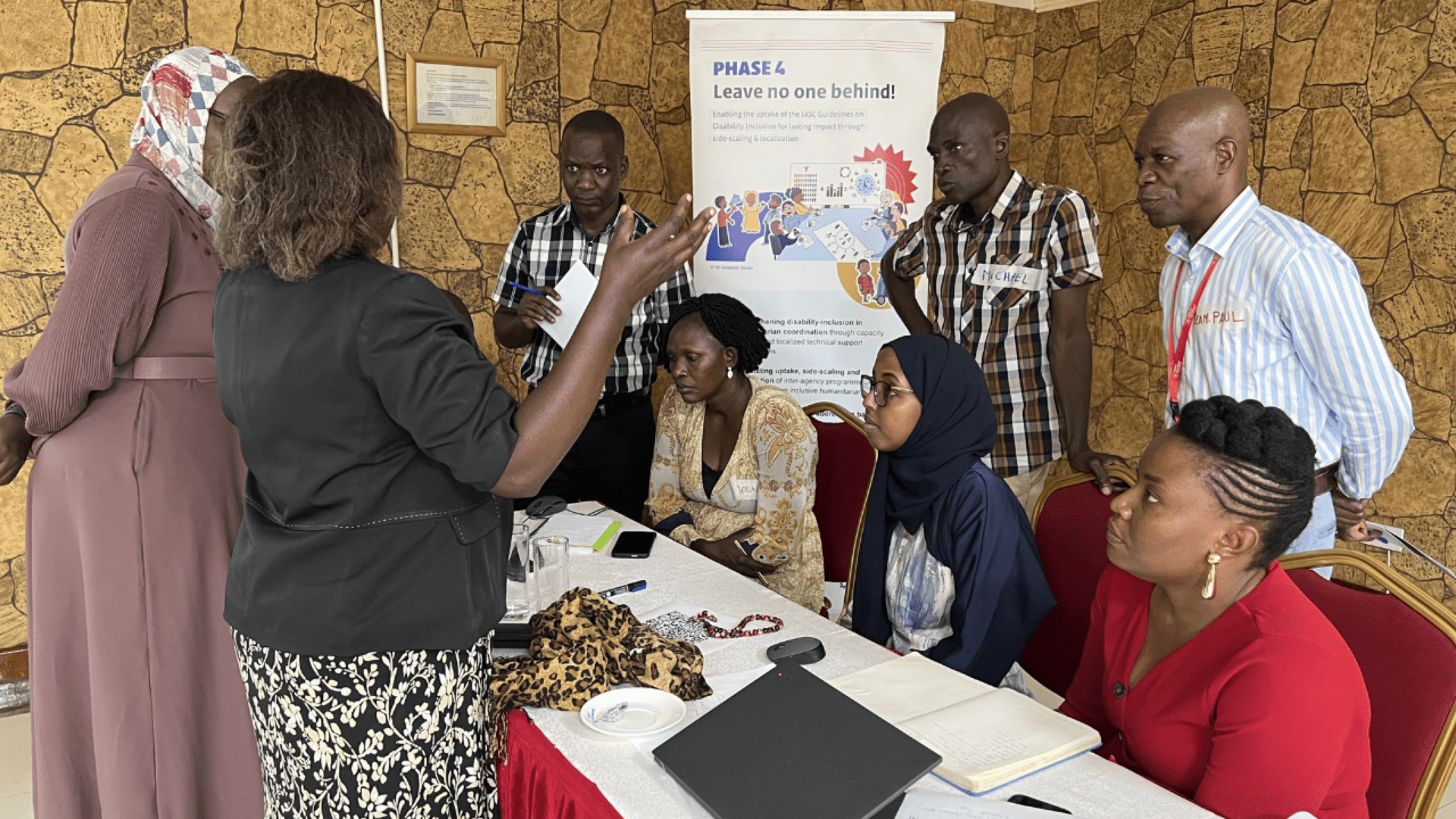
© HI
In March 2026, the Leave no one behind! (LNOB) project organized a pilot training on disability-inclusive Food Security in Uganda. The four-day event brought together humanitarian professionals to strengthen inclusive practices in food security programming and introduced a new training package on the topic.
A Collaborative Initiative
From March 16-19, 2026, the LNOB project, in partnership with Organizations of Persons with Disabilities (OPDs) NUDIPU, ARD, and leading humanitarian organizations, hosted a pilot training in Kampala, Uganda. The event aimed to capacitate humanitarian Food Security actors to integrate disability inclusion in their response, raise awareness and gain comprehensive feedback for the newly developed training package.
Opening remarks at the event from representatives of the World Food Programme and the Office of the Prime Minister highlighted the collective commitment to disability-inclusive humanitarian response.
Exploring the new training package
The training package was adapted from the Disability Reference Group’s modules on Inclusive Humanitarian Action with specific focus on the food security context. The training utilized the package to promote inclusive humanitarian response.
30 participants from the food security sector attended the workshop. The attendees were equipped with the tools and knowledge to integrate disability-inclusion into food security programs, in alignment with the IASC Guidelines on Inclusion of Persons with Disabilities in Humanitarian Action.
The workshop featured lectures, group activities, and discussions. Participants explored challenges faced by persons with disabilities and practical solutions for inclusive programming, gaining insights into accessibility, universal design, and reasonable accommodation as well as inclusive cash and voucher assistance. At the event “Must Do Actions” for disability-inclusive interventions were emphasized, providing attendees with useful strategies for their work.
One attendee noted:
“Most of our programs do not deeply consider inclusion. With the training I will be able to consider this inclusive approach in the project design.”
A participant from the Cash Working Group said:
“I found [the workshop] highly valuable and look forward to integrating the key learnings into my work.“
Following the training HI has been invited to give a presentation for the Cash Working Group on disability-inclusion in Cash and Voucher Assistance.
Next Steps
The disability-inclusive Food Security training package, will soon be available for broader use, enabling humanitarian actors to adopt disability-inclusive approaches in their food security programs.