Advancing Disability-Inclusive Humanitarian Action: 2026 Priorities and Progress
Category
Applied Accompanying Research Capacity Strengthening General IASC-Guidelines Nigeria Pilot Countries Somalia & Somaliland South Sudan Tools and Guidance Uganda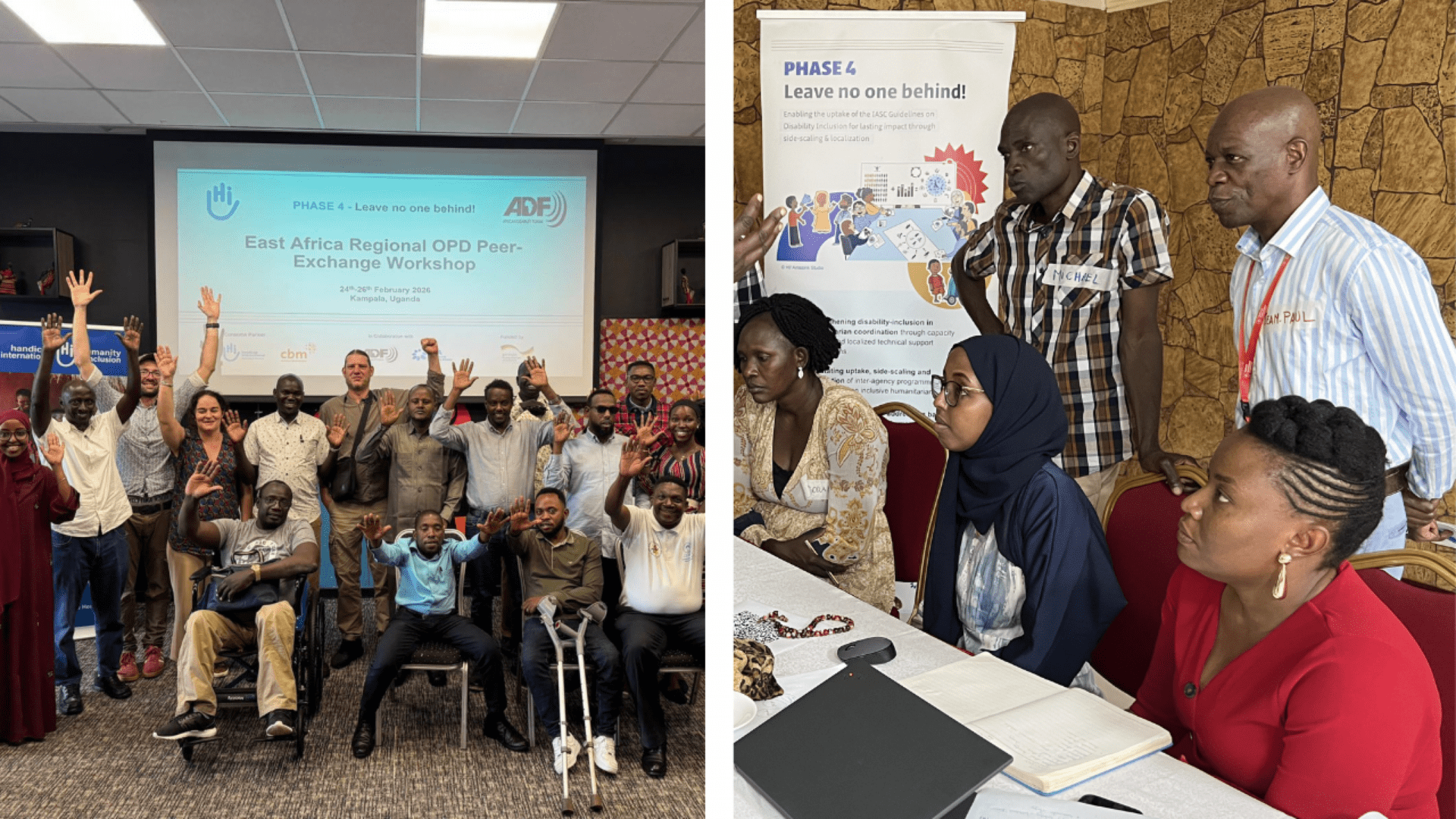
© HI
As we move forward in Phase 4 – Leave no one behind! (LNOB), we are happy to share our recent progress, challenges, and collaborative efforts. From new learning resources to pilot trainings and insightful research, we continue to advance disability-inclusive humanitarian action.
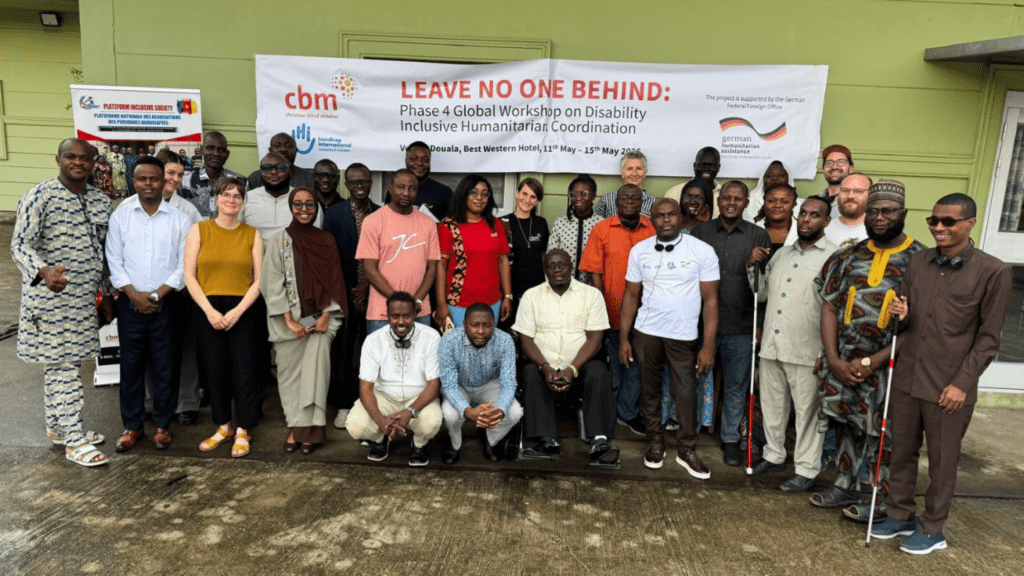
Second LNOB All-Team Workshop in Cameroon
In May the whole LNOB Team came together in Cameroon for its second consortium workshop. The five-day event brought together representatives from HI, CBM, and all six country teams, as well as OPD-partners to exchange, reflect, strategize, and advance disability-inclusion in humanitarian coordination and interventions. The workshop featured relevant topics for disability-inclusive humanitarian action in line with the IASC-Guidelines on Inclusion and covered all four results that guide Phase 4 – LNOB. Together, we identified progress and gaps in disability-inclusion amid the humanitarian reset and adapted our actions accordingly with focus on the finalisation of the project in 2027.
Coming Soon: Training Package on Disability-Inclusive Food Security
We are excited to announce that our training package on Disability-Inclusive Food Security will be launched soon. The pilot training on the topic in Uganda brought together government officials, humanitarian actors, and OPDs to address gaps in inclusive programming. The feedback from the training will be used to finetune the package before it’s official launch.
Strengthening Local Leadership in Food Security and WASH
In Nigeria, the LNOB project is supporting national and local actors to strengthen leadership in food security response through capacity-strengthening. Workshops in Damaturu brought together government agencies, NGOs, and community organizations to enhance skills in proposal development, reporting, and evidence-based prioritization, helping ensure that assistance reaches the most vulnerable households during a worsening food security crisis.
In South Sudan, the project has advanced the uptake of developed WASH training package through workshops in Wau and Juba. The trainings strengthened the capacity of WASH actors and Organizations of Persons with Disabilities (OPDs) to implement disability-inclusive Water, Sanitation, and Hygiene (WASH) interventions, promoting more accessible and inclusive responses.
Peer- Exchange and Networking with OPDs
Collaboration with OPDs continues to be a at the core of our work in all six project countries. LNOB initiated a peer-exchange event, bringing together OPDs from our project countries in East Africa – Somalia/Somaliland, Uganda and South Sudan– to exchange knowledge on the humanitarian system, discuss challenges, and explore possibilities for OPD participation. This initiative also gave way to networking and strengthening regional collaboration between OPDs.
During the exchange, we had the opportunity to talk with our OPD partners and reflect on their experiences of collaborating with LNOB. Their video testimonials highlight the achievements, challenges, and lessons learned through our joint efforts, while underscoring the importance of meaningful OPD participation in humanitarian coordination and decision-making.
Insights from OPD Research: Challenges Faced by Refugees with Disabilities in Uganda
We are not only supporting OPDs through capacity-strengthening but also in leading their own efforts with dedicated small-grants. Our OPD-partners in Uganda, the Association of Refugees with Disabilities (ARD) and the National Union of Disabled Persons of Uganda (NUDIPU) have thereupon assessed the lived experiences of refugees with disabilities in Uganda’s biggest refugee settlements. Findings of the studies show that people with disabilities face complex barriers and are often excluded from humanitarian services.
Learning Papers on Promoting Disability-Inclusion in Humanitarian Coordination
If you are interested in learning more on how to promote disability-inclusion in humanitarian coordination and the best practices of meaningful participation of OPD’s in humanitarian coordination, have a look at the learning papers below. These learning papers were published by The Disability Reference Group (DRG) with the support of LNOB.
As we continue to advance disability-inclusive humanitarian action, we remain committed to learning, adapting, and collaborating. The Leave no one behind! project is implemented in close partnership with HI and CBM, in collaboration with the International Disability Alliance (IDA),the African Disability Forum (ADF), and national OPDs in all six pilot countries across West-and East Africa